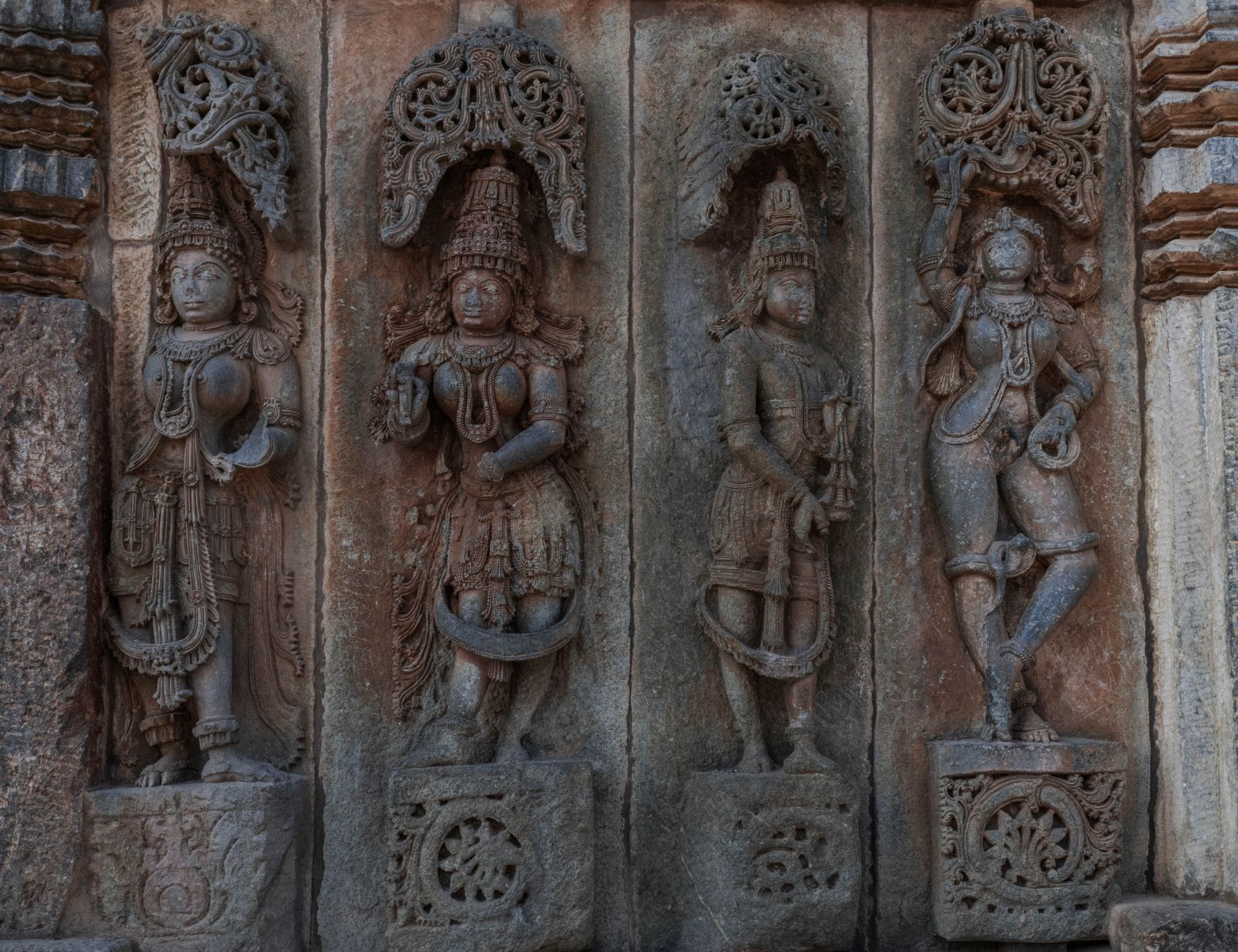
A single day in Belur rewards anyone willing to arrive early and slow down in front of the stonework. The Chennakeshava Temple complex is the undisputed centrepiece, but the surrounding shrines, the temple tank, and a well-timed lunch at a local darshini together make for a deeply satisfying day without any sense of rushing.
Why does timing matter so much in Belur?
Belur sits in the Hassan district of Karnataka, about 220 kilometres from Bengaluru, and draws a steady stream of visitors who combine it with Halebidu in a single day trip. That pairing is perfectly reasonable, but if you have only one day and Belur is your sole focus, you gain something those hurried combined visits rarely allow: the chance to stand in front of a single bracket figure on the temple exterior and actually trace the story it tells.
The light on the western facade is at its best in the late afternoon, but the crowds are thinnest in the early morning. Arriving by 8 AM, before the tour buses from Hassan pull in, means you can walk the circumambulatory path around the main temple almost in silence, which changes the experience considerably. The Archaeological Survey of India opens the complex at sunrise, so an early start is never wasted here.
Related: Belur in 2 Days: What to See and Where to Stay
See also: Mysore in 2 Days: The Complete Itinerary & Where to Stay
See also: One Day in Kalaburagi: What Not to Miss
What should you see first inside the Chennakeshava Temple complex?
Begin with the exterior of the Chennakeshava Temple itself, the star-shaped platform it rests on, and the horizontal bands of sculpture that wrap the entire structure. These bands are conventionally described from bottom to top: elephants for stability, scrolling foliage, horses for speed, more foliage, then the figurative scenes from epics and daily Hoysala court life, followed by makaras and geese, and finally the larger devotional figures in their niches. Moving slowly along this sequence, even on just one wall, takes the better part of an hour if you are genuinely looking.
The bracket figures — the celebrated Shilabalikas — deserve particular attention. Each is distinct, carved by a named sculptor according to Hoysala records, and the quality of the jewellery, the drape of fabric, and the facial expression varies quite noticeably between them once your eye adjusts. There are forty-two of these figures on the main temple, and no two are the same.
Inside the temple, the lathe-turned pillars each have a different profile, a deliberate demonstration of the craftsmen's skill that the Hoysala kings apparently commissioned as a kind of competitive display. The dark interior takes a moment to adjust to, but the carved ceilings, particularly the central pendant, are among the most intricate pieces of stone cutting you will find anywhere in South India.
Are the smaller shrines within the complex worth your time?
Yes, and they are frequently overlooked by visitors who spend all their energy on the main temple and then leave. The Kappe Chennigaraya Temple, a smaller structure within the enclosure walls, was built during the reign of Vishnuvardhana's queen and is thought to predate the main temple's completion. Its scale is more intimate, and because fewer visitors bother with it, you can examine the sculpture at close quarters without jostling.
The Veeranarayana Temple in the same complex has its own distinct atmosphere, particularly around midday when the priests conduct a brief puja and the smell of camphor drifts through the pillared mandapa. These smaller acts of living worship, continuing inside a structure nearly nine centuries old, give Belur a quality that purely museum-style heritage sites lack.
The temple tank to the east of the complex is worth a short walk around. It reflects the gopura in the morning light and provides a calmer vantage point from which to appreciate the overall scale of the enclosure.
Where should you eat during your day in Belur?
The town of Belur itself is small and its restaurant options are straightforward rather than remarkable. The cluster of darshini-style eateries near the bus stand serve a good South Indian breakfast — idli, vada, and strong filter coffee — and are busy with locals from around 7 AM onwards, which is a reliable sign of quality. For lunch, a full meals thali at one of these places is the practical and honest choice: rice, sambar, rasam, two or three vegetable palyas, curd, and papad, served on a steel plate and refilled without asking.
If you are combining Belur with a visit to Halebidu, the drive between the two towns takes about fifteen minutes and passes through agricultural land that is itself pleasant to observe, particularly if paddy cultivation is underway.
Where should you stay if you want to extend your visit?
Most visitors to Belur base themselves in Hassan, which offers more accommodation variety and sits roughly equidistant from both Hoysala sites. However, staying in or near Belur itself gives you the early morning access that makes the temple experience genuinely different.
For travellers who want comfort with a strong review base, Sunshine International Boarding & Lodging holds a rating of 8.3 from nearly 200 reviews, which is a meaningful sample size for a three-star property. Dwarasamudra Resort Belur is a three-star option rated 7.6 that places you closer to the heritage atmosphere of the town. For those willing to trust smaller samples, Aqua Terra Villas Belur carries a perfect score from a handful of reviews and is worth investigating if boutique accommodation appeals. Pepper Corn Retreat by Travent Mug is a four-star property rated 8.5, and while its review count is modest, the rating is consistent with what travellers seeking quieter, well-appointed stays in this region tend to report.
For budget-conscious visitors, KSTDC Hotel Mayura Shantala Halebeedu is the state tourism department property based in Halebidu, rated 7.4, and a practical base if you plan to visit both sites.
How does Belur compare to Halebidu for a first-time visitor?
This is a question worth addressing directly. Halebidu's Hoysaleshwara Temple complex is larger in footprint and the exterior sculpture is arguably even more densely detailed. But Belur's Chennakeshava Temple is a living, functioning temple with daily worship, which Halebidu's shrines — as ASI-protected monuments — are not in the same way. If you must choose only one, Belur's combination of active religious life and exceptional craftsmanship makes it the slightly richer single-site experience. If your schedule allows both, the Hassan district itinerary that combines them is the most common approach, and for good reason.
The best time to visit Belur is between October and February, when the weather is cooler and the light on the stone has a quality that the harsh summer months simply do not provide. You can read more about planning your visit in our best time to visit Hassan guide.
FAQ
How long does it take to see the Chennakeshava Temple properly? Allow at least two to three hours for the main temple and the smaller shrines within the complex, more if you are genuinely interested in the sculpture rather than simply walking through.
Is Belur easy to reach from Hassan by public transport? Yes. Frequent KSRTC buses connect Hassan to Belur throughout the day and the journey takes around forty-five minutes. Auto-rickshaws are also available for the full day trip combining Belur and Halebidu if you prefer flexibility.
Can you visit Belur and Halebidu in one day? Comfortably, yes, provided you start from Hassan by 8 AM. Most visitors spend around two hours at each site and return to Hassan by mid-afternoon. Choosing one over the other is only necessary if you want a genuinely unhurried experience at a single temple.
Is there an entry fee for the Chennakeshava Temple? Indian nationals enter free of charge. Foreign nationals pay a fee set by the Archaeological Survey of India, which is subject to revision. It is worth checking the ASI website or confirming locally before your visit.