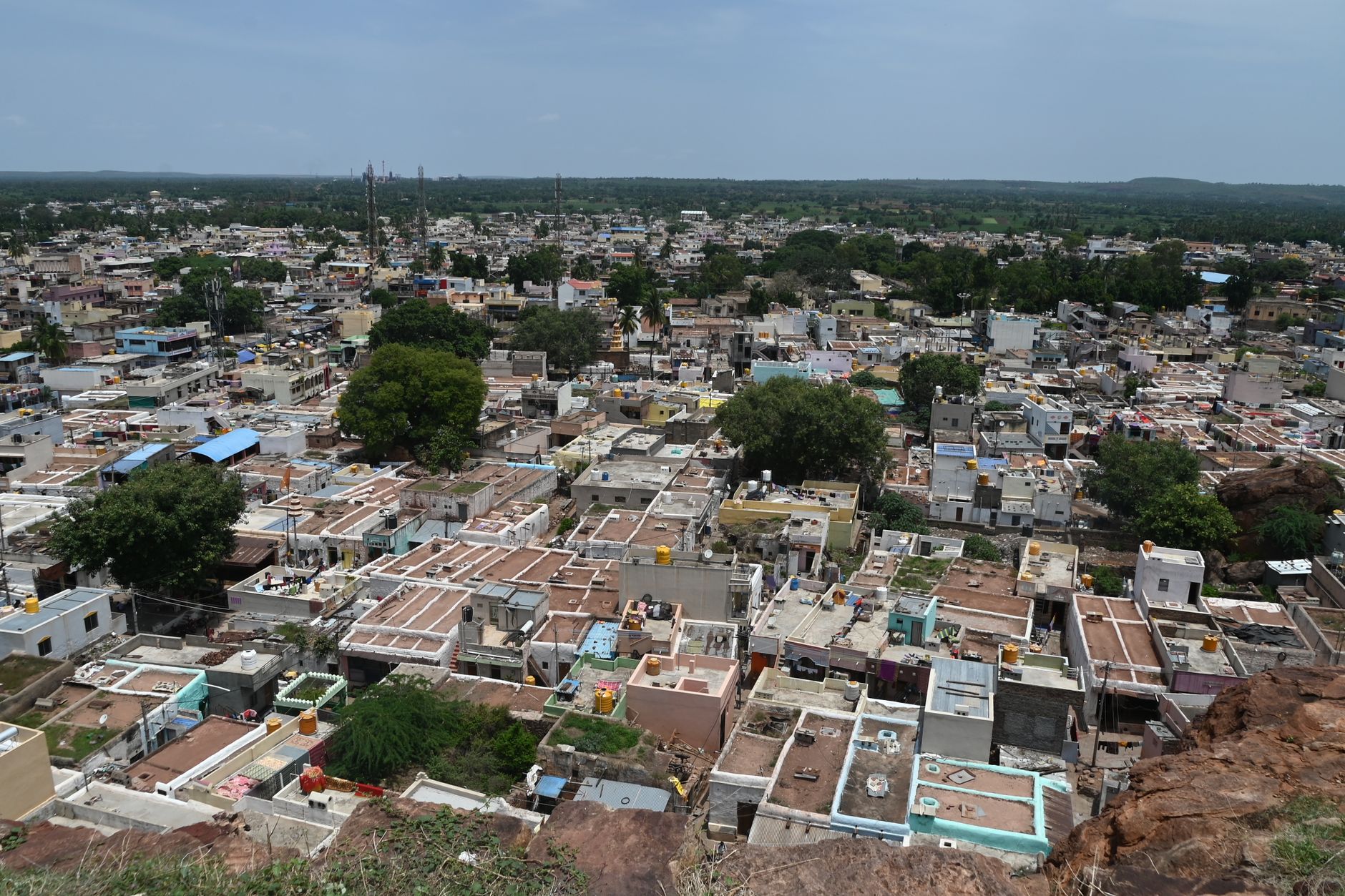
Two days is genuinely enough time to absorb what Kalaburagi — still widely known by its older name Gulbarga — has to offer. The city holds some of the most significant Bahmani Sultanate architecture in India, a Sufi shrine that draws pilgrims from across the subcontinent, and a quietly distinctive food culture. This itinerary gives you a sensible pace, real recommendations, and honest advice on where to sleep.
Kalaburagi sits in the far north of Karnataka, close to the Telangana border, and that geography shapes everything — the dialect, the flatbread-heavy cuisine, the dry landscape, and the layered Deccan history you'll encounter at every monument.
Day One: The Fort, the Friday Mosque, and the Old City

Start your morning at Kalaburagi Fort, ideally by 8am before the heat builds. Built originally in the 14th century by the Bahmani Sultanate and expanded under subsequent rulers, the fort is a sprawling, partially ruined complex that most visitors move through too quickly. Give it at least two hours. The most architecturally remarkable element inside is the Jama Masjid, modelled loosely on the Great Mosque of Córdoba in Spain — its vaulted arcades and covered courtyard create an atmosphere quite unlike anything else in Karnataka. The mosque is one of the oldest in the Deccan and remains an active place of worship, so dress modestly and be respectful of prayers.
Related: Chikmagalur in 2 Days: What to See and Where to Stay
See also: Mysore in 2 Days: The Complete Itinerary & Where to Stay
See also: Chitradurga in 2 Days: What to See and Where to Stay
After the fort, walk or take an autorickshaw into the older parts of the city. The streets around Shah Bazaar are worth an hour of unhurried time — you'll find vendors selling bangles, dried fruit, and the local jowar-based snacks that are worth trying even mid-morning.
For lunch, seek out one of the small restaurants near the city centre that serve jolada rotti with spiced brinjal or peanut chutney. This is the bread of north Karnataka and it tastes genuinely different here — slightly earthier and more textured than the soft versions you'll find in Bengaluru restaurants attempting to replicate it.
Spend your afternoon at the Dargah of Hazrat Khwaja Banda Nawaz, one of the most significant Sufi shrines in South India. The saint, also known as Gesu Daraz, was a 14th-15th century scholar and mystic whose influence extended across the Deccan. The complex is large, busy with devotees, and layered with small courtyards and adjoining mosques. Even if you have no personal connection to Sufi tradition, the atmosphere here — the incense, the quiet recitation, the mix of people from different communities — is genuinely affecting. The annual Urs festival (typically in October or November) draws enormous crowds, so if your visit coincides, expect the city to be transformed.
End the evening with a walk along Super Market Road, which has tea stalls and juice shops that fill up as the day cools. Kalaburagi is not a city with a nightlife scene in the conventional sense, and that is part of its character — evenings here are about chai, conversation, and early dinners.
Day Two: Sharana Basaveshwara Temple, Haft Gumbaz, and the Drive Out

Begin day two at the Sharana Basaveshwara Temple, a significant Lingayat pilgrimage site dedicated to a 16th-century saint. The temple is active and atmospheric in the early morning, and gives you a clear sense of how deeply Karnataka's Lingayat tradition runs even in a city with a predominantly Muslim historical heritage. The two traditions coexist here without much friction — you'll find shrines, dargahs, and temples all within short distances of each other.
By mid-morning, make your way to Haft Gumbaz, meaning Seven Domes — a group of Bahmani-era royal tombs set in a garden compound. The domes are large, weathered, and architecturally satisfying, with detailed geometric plasterwork that has survived reasonably well despite centuries of exposure. This is a quieter site than the fort or the dargah, and worth an hour of unhurried attention.
If time allows before you depart, the Budda Vihar near the city is worth a brief visit for those interested in the Ambedkarite Buddhist movement in Karnataka — it represents an important strand of contemporary social and religious life in the region that mainstream tourism itineraries tend to overlook.
For your final lunch, try one of the restaurants serving Hyderabadi-inflected biryani, reflecting the Telangana border influence, alongside the more typically Kannadiga thali options available across the city.
Where to Stay in Kalaburagi: Honest Comparisons

Kalaburagi's hotel scene is functional rather than atmospheric — you won't find heritage havelis or boutique properties here. What matters is cleanliness, location relative to the main sites, and reliable service.
For the best balance of quality and value, ZEST CLUB leads the ratings at 8.7/10 from 58 reviews, making it the strongest mid-range option with consistent guest satisfaction. Mastiff Select Gulbarga Hotel matches that 8.7 rating from 51 reviews and is a solid choice if you prefer a slightly more traditional hotel environment. Enrise By Sayaji Kalaburagi also hits 8.7 from 33 reviews — fewer reviews, but the consistency is encouraging.
If you want the highest-rated larger property, SR Continental carries a five-star classification and an 8.4/10 from 158 reviews — the largest review base on this list, which gives the score more weight.
For mid-budget travellers, Kyriad Hotel Gulbarga at 7.9/10 from 122 reviews is a reliable international chain option with solid standards. HOTEL LUMBINIS GRAND and Hotel Posh both sit at 7.4/10 and represent decent budget-to-mid choices.
Worth avoiding unless options are exhausted: Regal Residency at 5.2/10 and OYO 38770 Hotel Regal Residency at 5.7/10 have ratings that suggest inconsistency you'd rather not encounter mid-trip.
Abhimaan Residency (6.1/10) and Hotel New Centro (6.9/10) sit in acceptable but uninspiring territory — fine if the better options are full. Saroja Suites has a five-star classification but only 13 reviews and a 6.6 rating, which is too thin a base to recommend confidently.
When Is the Best Time to Visit Kalaburagi?
October through February is the most comfortable window — temperatures drop to genuinely pleasant levels and the light in the early morning is particularly good for the fort and the tombs. The monsoon (June–September) brings some relief from the heat but the sites can be muddy. Summer months from March to May are harsh in this part of the Deccan and best avoided unless you have no choice.
For more context on timing your visit, see our Kalaburagi best time to visit guide.
Practical Notes Before You Go
Kalaburagi is connected by rail to Bengaluru, Hyderabad, and Mumbai, making it straightforward to reach without flying. Autorickshaws are the easiest way to move between sites — agree on a fare beforehand or insist on the meter. Most monuments open around 8am and close by 6pm. The dargah has its own hours tied to prayer times, so check locally. Carry cash, as card acceptance is limited at smaller restaurants and shops.
FAQ
Is two days enough for Kalaburagi? Yes, comfortably. The main sites — the fort, Jama Masjid, the Banda Nawaz dargah, Haft Gumbaz, and Sharana Basaveshwara Temple — can all be visited without rushing across two days, leaving time for the city's food and street life.
What is Kalaburagi known for historically? Kalaburagi was the first capital of the Bahmani Sultanate, which ruled much of the Deccan from the 14th century. This heritage explains the concentration of mosques, tombs, and fortifications that make it distinctive among Karnataka's cities.
Are there vegetarian food options in Kalaburagi? Absolutely. North Karnataka's cuisine is naturally well-suited to vegetarian eating — jolada rotti, ennegayi (stuffed brinjal), and various lentil preparations are the foundation of local cooking. Most restaurants serve both vegetarian and non-vegetarian menus.
How do I get from Bengaluru to Kalaburagi? The Gulbarga Express and other trains connect Bengaluru (KSR or Yesvantpur) to Kalaburagi in roughly 8–10 hours overnight, making it easy to arrive fresh in the morning. Buses from Bengaluru's Majestic station are also frequent and take a similar duration.