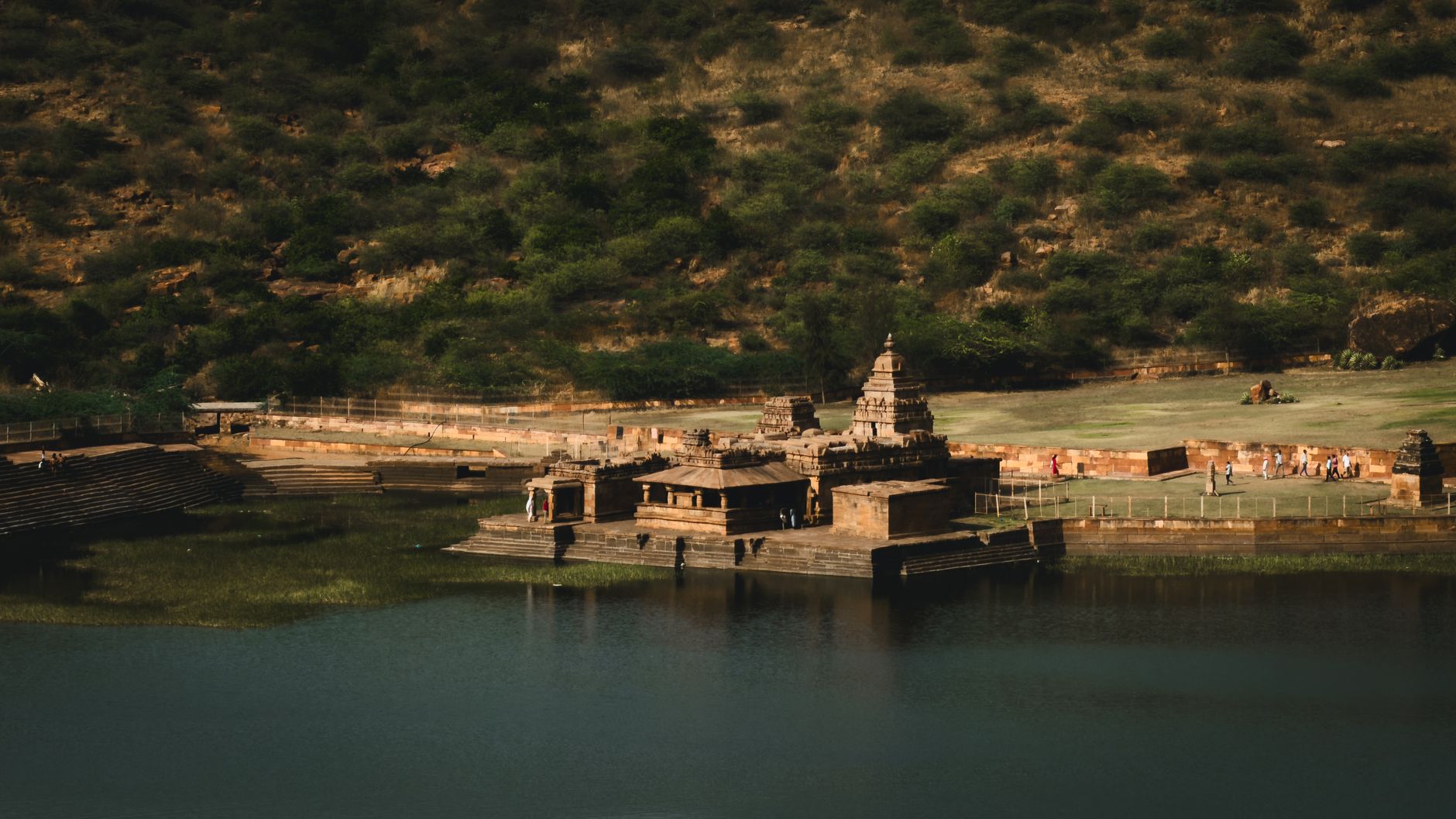
Badami is a compact but extraordinarily rich destination anchored by its famous 6th-century cave temples carved into russet sandstone cliffs. Beyond the temples, you'll find swimming tanks, ancient sculptures, viewpoints over the twin lakes, and some of Karnataka's most atmospheric walks through coffee plantations and quiet villages. Most visitors spend two to three days here, though one day is enough for the main sites.
The Cave Temples: What You're Really Coming For
Four Chalukya-era cave temples dominate Badami. Carved directly into the red sandstone between 578 and 680 CE, they're less crowded than Ajanta or Ellora, but just as architecturally precise. Each cave is numbered—Cave 1 through 4—climbing chronologically up the cliff face.
Cave 1 sits highest and contains carvings of Shiva in multiple forms, with intricate pillar work and reliefs depicting his dance. The view from its entrance spans the entire town and both lakes. Cave 2, dedicated to Vishnu, sits mid-cliff and has the most intact sculptures: a six-armed Vishnu, serpent imagery, and beautifully carved railings. Cave 3 is the largest, with a columned verandah and a meditation chamber. Cave 4, actually a Jain temple (the only one of the set), sits lowest but carries stunning relief work of the Tirthankaras.
Related: Hampi Virupaksha Temple Guide: Timings, Entry and What to See
See also: Mysore in 3 Days: The Complete Itinerary
See also: Hotel President Mysore: Location, Amenities & Booking Guide
Visit early—5:30 to 7 a.m.—when light is soft, crowds nonexistent, and the rock glows warm rust-red. Bring water and sturdy shoes; the steps are steep and can be slippery after rain. Expect 90 minutes to two hours to explore all four caves properly.
Badami's Lakes and Tank Sites
Two interconnected lakes form Badami's geographical and spiritual heart. Agastya Lake (also called Agastya Tirtha) sits at the southern end, ringed by small temples and ghats. Early morning, local people bathe here and fishermen cast nets; it's genuinely serene. Walk the eastern bank to reach Banashankari Temple, a modest but active shrine on a small hillock with views across the water.
Parvati Lake lies to the north, quieter and ringed by banyan trees. A footpath connects the two, making a three-kilometre loop walk possible. The water is clearest from October to April; in monsoon (June–September), the lakes swell but the paths become muddy and slippery.
North Fort: Ruins and Views
Above and north of the cave temples, accessible via a winding path, lies the North Fort. This 6th-century fortification now stands in ruins, but the walk is worthwhile for the 360-degree perspective over the town, both lakes, and surrounding scrub forest. You'll spot old bastions, collapsed structures, and surprisingly, patches of flowering shrubs in season. Allow 45 minutes from the cave temples; bring a hat and water.
The Town Itself: Sculpture Museum and Heritage Streets
The small Badami Archaeological Museum, near the main temple precinct, houses stone sculptures recovered from local excavations—warrior reliefs, stone vessels, and religious iconography spanning centuries. It's brief (30 minutes) but contextualises what you see carved into the cliffs. Entry is nominal.
The town's main bazaar is narrow and atmospheric, lined with small shops selling religious items, local sweets (jaggery-based varieties are excellent), and textiles. Stop at local tea stalls in the morning; interaction with shopkeepers often reveals family stories and local festival dates.
Coffee Plantations and Forest Walks
Badami sits on the edge of the Western Ghats. The surrounding landscape is coffee and spice estates, interspersed with deciduous forest. Arrange a guide locally (ask your hotel) for a plantation walk—usually three to five kilometres through shaded canopy, learning about shade-grown coffee and cardamom cultivation. These walks are best October to April, when paths are dry and the canopy less oppressive.
Seasonal Considerations
October to February is peak season: clear skies, cool mornings, perfect lighting for photographs. Cave exploration is comfortable, and the lakes are calm. Accommodation books up, especially weekends; book ahead.
March to May brings heat—temperatures reach 38–40°C by afternoon—but the light is dramatic and crowds thin. Morning visits to caves are essential; avoid midday entirely.
June to September (monsoon) transforms the landscape into lush green. The caves stay accessible, but paths are muddy and the light is often grey. Water-filled tanks and forest streams, however, attract birds and create different visual magic. Accommodation is cheapest and least crowded.
Where to Stay
For a classic experience with heritage character, Krishna heritage (3-star, 8.8/10 rating) offers thoughtful service and rooms overlooking the lake. If you want a mid-range resort atmosphere with a pool, Sterling Banashree Badami (4-star, 8.0/10 rating) is the most polished option in town. Budget travellers should consider Kusum Resort (3-star, 9.0/10 rating), which punches well above its price for cleanliness and hospitality. For KSTDC reliability, KSTDC Hotel Mayura Chalukya, Badami (2-star, 7.3/10 rating) provides basic comfort at very modest rates.
Local Tips from the Ground
- Hire a local guide for the caves (₹300–500 for two hours). The historical context transforms casual sightseeing into genuine understanding.
- Bring a torch when visiting caves; certain inner chambers are dimly lit, and you'll spot details others miss.
- Respect active worship sites. Some caves and shrines are still used by devotees; dress conservatively and avoid touching sculptures.
- Visit the lakes at dawn for the best wildlife (egrets, herons, occasional monitor lizards) and tranquillity.
- Carry change. Small shops and local vendors don't always have it; ATMs exist but can be unreliable.
Nearby Worth Your Time
If you have a second day, visit Pattadakal (22 km, 45 minutes by road), a UNESCO site with three stunning temples and quieter than Badami. Or explore Aihole (35 km), a village dotted with over 100 small temples spanning five centuries—a richer archaeology site than Badami itself, though less iconic.
FAQ
How long should I spend in Badami? Two days minimum: one full day for the caves, North Fort, and town; a second for plantations walks, nearby villages, or Pattadakal. One long day is possible but rushed.
Is Badami accessible by public transport? Yes. Regular buses connect Badami to Belgaum (80 km, 2–3 hours) and Hospet (85 km). Trains are limited. Hiring a taxi or car from a larger city is more convenient if you have luggage.
What's the best time to photograph the cave temples? Early morning, October to February. The sun rises behind the eastern face, casting the sculpted details into sharp relief and warming the sandstone to deep red-gold.
Can I swim in the lakes? Agastya Lake has designated bathing ghats. Water quality is best October to March. Avoid swimming during monsoon or immediately after heavy rain; water can be murky and currents unpredictable near the outflows.