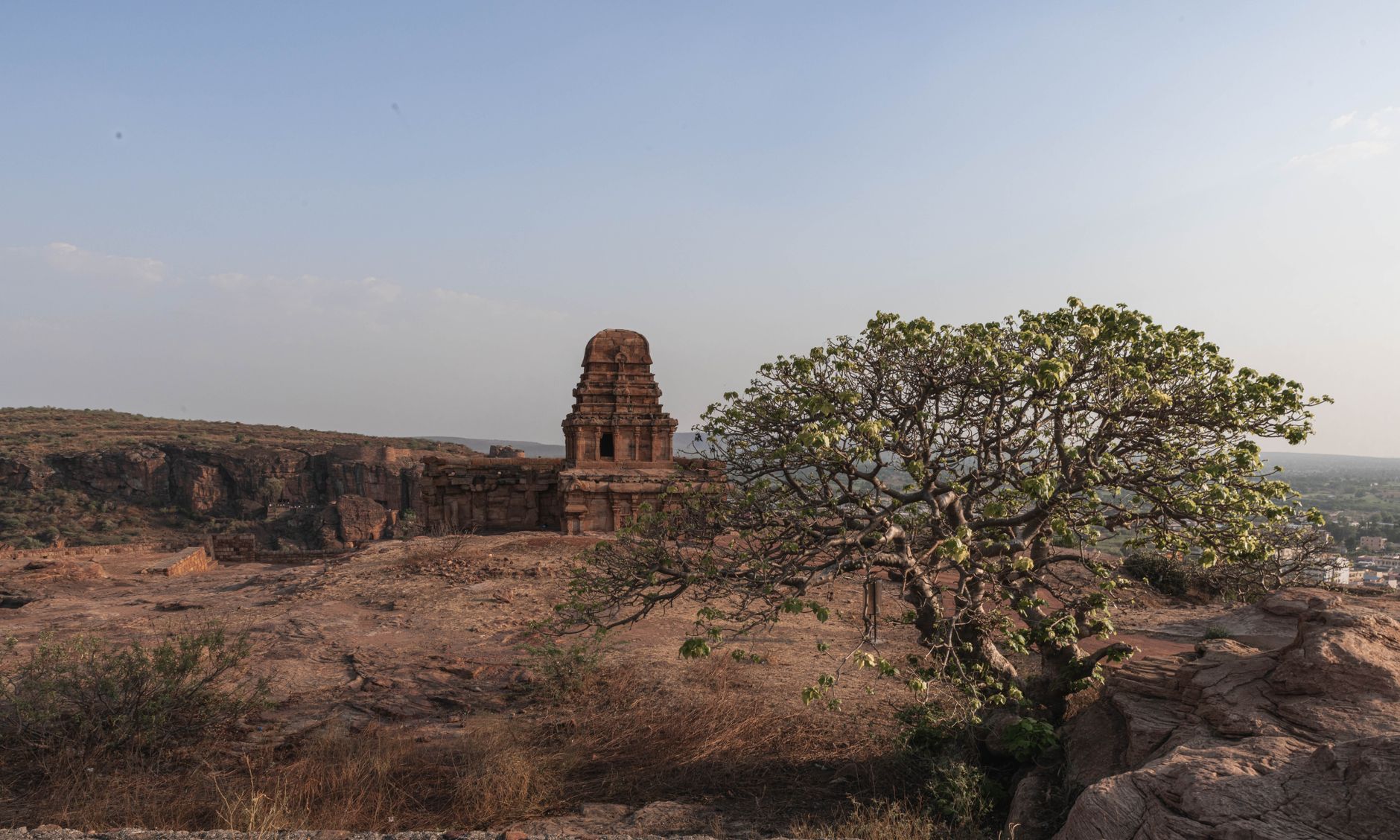
This Karnataka 7-day itinerary threads together the Western Ghats, the Deccan plateau's UNESCO heritage sites and the Konkan coastline into one logical, road-trip-friendly loop. Starting and ending in Bengaluru, the route takes in Coorg's coffee estates, the ruins of Vijayanagara at Hampi, the rock-cut caves of Badami, and the temple-studded beaches of Gokarna — all within a week, without the frantic rushing that ruins so many Karnataka trips.
Is Seven Days Enough for Karnataka?
Honestly, Karnataka could swallow a month without blinking. But seven days, routed intelligently, is enough to feel the state's extraordinary range — elevation changes of over 1,500 metres, architecture spanning the 6th to 14th centuries, and coastline that shifts from backed-by-jungle cliffs to wide open bays. The key is resisting the urge to add Mysuru or Chikmagalur to this particular loop; save them for a separate trip and do these four regions justice.
Day-by-Day Breakdown
Day 1–2: Coorg (Madikeri)
Fly or drive into Bengaluru and head straight southwest — the drive to Madikeri takes roughly five hours through the chai-stop town of Hassan. Arriving by evening of Day 1 gives you a full Day 2 in the hills.
Related: Coorg vs Sakleshpur vs Chikmagalur: The Coffee Country Decision
See also: Coorg vs Chikmagalur: Which Coffee Country Escape Suits You?
Related: Gokarna vs Goa: The Honest Comparison
Coorg is Karnataka's hill-country heartland: a district of cardamom-scented air, plunging river valleys and coffee estates that turn bright red with ripe cherry in November and December. On Day 2, visit Abbey Falls early before the crowds arrive, then drive up to Raja's Seat for the sunset panorama across the Ghats. If you have energy, an afternoon walk through a working coffee estate — many welcome visitors informally — gives genuine insight into how Coorg's economy functions.
Coorg sits at around 1,100–1,500 metres depending on where you are in the district, so nights are cool even in summer. Pack a light layer regardless of when you visit. Read more about timing your visit on our Coorg best time to visit guide.
Day 3: Drive to Hampi via Hospet
This is your longest driving day: roughly 5.5 to 6 hours from Madikeri to Hospet (the nearest town to Hampi), crossing from the humid Ghats into the dry Deccan interior. The landscape shift alone is worth watching from the window — within two hours you go from mist and banana trees to red laterite earth and coconut groves, then to black cotton soil and boulders. Arrive by late afternoon, check in at Hampi or Hospet, and walk down to the Tungabhadra riverbank at dusk to watch the light turn the boulders amber.
Day 4: Hampi Full Day
Hampi is the centrepiece of this itinerary and arguably the most spectacular archaeological site in South India. The ruined capital of the Vijayanagara Empire (14th–16th century) spreads across 36 square kilometres of surreal boulder-strewn landscape, with over 1,600 listed monuments. One day is the minimum; two is better. With one, prioritise:
- Virupaksha Temple — still an active place of worship, and architecturally stunning
- Vittala Temple complex — home to the famous stone chariot and musical pillars; go early, queues build fast
- Royal Enclosure — the Lotus Mahal, elephant stables and stepped tank
- Matanga Hill — sunset views over the entire site
Hire a bicycle or auto-rickshaw to connect the sites; the distances are too far to walk in the heat. Hampi is best visited between October and February — see our Hampi destination page for the full seasonal picture.
Day 5: Hampi to Badami (via Pattadakal and Aihole)
The drive from Hampi to Badami takes around three hours, but the road passes within easy reach of Pattadakal and Aihole — two Early Chalukya sites that together with Badami form a UNESCO-listed triangle of 6th–8th century temple architecture. Most visitors skip these and go straight to Badami; don't make that mistake.
Aihole (roughly 35 km from Badami) has over 120 temples spread across a village setting — the Durga Temple with its apsidal plan and the Lad Khan Temple are the standouts. Pattadakal (22 km from Badami) is smaller but arguably more refined, with temples that clearly influenced later Dravidian and Nagara styles across the subcontinent. Both sites take 1–1.5 hours each. Arrive in Badami by evening.
Day 6: Badami Caves, Then Drive to Gokarna
Badami's rock-cut cave temples are carved into a sandstone cliff face above a sacred tank, and the morning light on that red rock is genuinely extraordinary — arrive at 7am before the tour groups. The four caves (three Hindu, one Jain) were cut in the late 6th century under the Chalukya king Mangalesha and contain some of the finest early medieval sculpture in India. The Mahishasuramardini panel in Cave 1 and the Trivikrama panel in Cave 3 are not to be missed.
After the caves, it's a 3.5-hour drive west to Gokarna, dropping back down through the Ghats to the Arabian Sea coast. The contrast after two days of dry inland heat is dramatic.
Day 7: Gokarna
Gokarna is often described simply as "Goa's quieter neighbour", which undersells it. Yes, it has excellent beaches — Om Beach and Kudle Beach are the most popular, while Half Moon and Paradise require a short clifftop trek to reach. But Gokarna is also a legitimate pilgrimage town centred on the Mahabaleshwar Temple, one of South India's most sacred Shiva shrines. The mix of sadhus, backpackers, and local fishing families creates a character unlike anywhere else on Karnataka's coast.
Spend the morning at the temple (dress modestly; non-Hindus may not enter the inner sanctum but can observe the gopuram and outer precinct), then walk or take a boat to whichever beach suits your mood. The evening aarti at the temple is worth returning for. See our Gokarna guide for beach comparisons and transport options from here.
From Gokarna, you can fly home from Goa (Dabolim or Mopa airport, roughly 2.5 hours away) or take the overnight train back to Bengaluru — the Gokarna Road railway station connects to the Konkan Railway line.
How Does This Route Compare to the Classic Karnataka Triangle?
The standard "Karnataka triangle" itinerary — Bengaluru, Mysuru, Coorg — is popular for a reason: it's easy, the roads are excellent, and Mysuru Palace is genuinely unmissable. But it misses everything north of Bengaluru entirely. This hills-heritage-coast itinerary is harder logistically (longer drives, more remote areas) but offers far greater range. If you're a first-time visitor with only three or four days, do the triangle. If you have a week and want Karnataka's full breadth, this route is the better investment.
Practical Tips for This Itinerary
- Best months: October to February. March–May is very hot in Hampi and Badami (temperatures above 40°C are common). The monsoon (June–September) is dramatic in Coorg and Gokarna but makes Hampi's boulder terrain slippery.
- Transport: A self-driven hire car from Bengaluru gives maximum flexibility. State buses connect all these towns but add significant time. Trains work well for Hampi (Hospet Junction) and Gokarna (Gokarna Road station).
- Pace: This is not a relaxed itinerary — it's designed for travellers who want to cover ground. If you want to linger, drop Badami and spend the extra day in Hampi or Gokarna.
- Connectivity: Mobile signal is patchy between Coorg and Hampi, and around Badami. Download offline maps before you leave Bengaluru.
FAQ
Can I do this Karnataka 7-day itinerary without a car? Yes, but it requires more planning. Hampi is well connected by overnight bus from Bengaluru and by train via Hospet. Badami is reachable by train from Hospet (change at Gadag). Gokarna has its own station on the Konkan Railway. The Coorg leg is hardest without a car — KSRTC buses run from Bengaluru to Madikeri but getting around within Coorg requires hiring a local cab.
Is this route suitable for families with children? Yes, with minor adjustments. Hampi's boulder landscapes are genuinely exciting for older children. The cave temples at Badami have steep steps but most kids manage well. The beach day in Gokarna is an obvious hit. Coorg's estate walks are calm and manageable. Just factor in that the driving days are long — break them up with stops.
When is the worst time to attempt this itinerary? April and May. Hampi and Badami in peak summer are brutal — midday temperatures regularly exceed 42°C, shade is scarce, and the sites are largely exposed. The coast and Coorg are more bearable but the inland legs become genuinely uncomfortable. If summer travel is unavoidable, flip the itinerary to spend middays resting and sightseeing only in the early morning and late afternoon.
How much flexibility should I build in for delays? At least one buffer half-day. The Hampi to Badami road, while scenic, passes through several towns and can be slow. Temple entry queues at Hampi's Vittala complex have grown significantly in recent years, especially at weekends. If you're travelling during a major festival — Hampi Utsav (November), or Shivratri in Gokarna — add an extra day's margin and book accommodation well in advance.