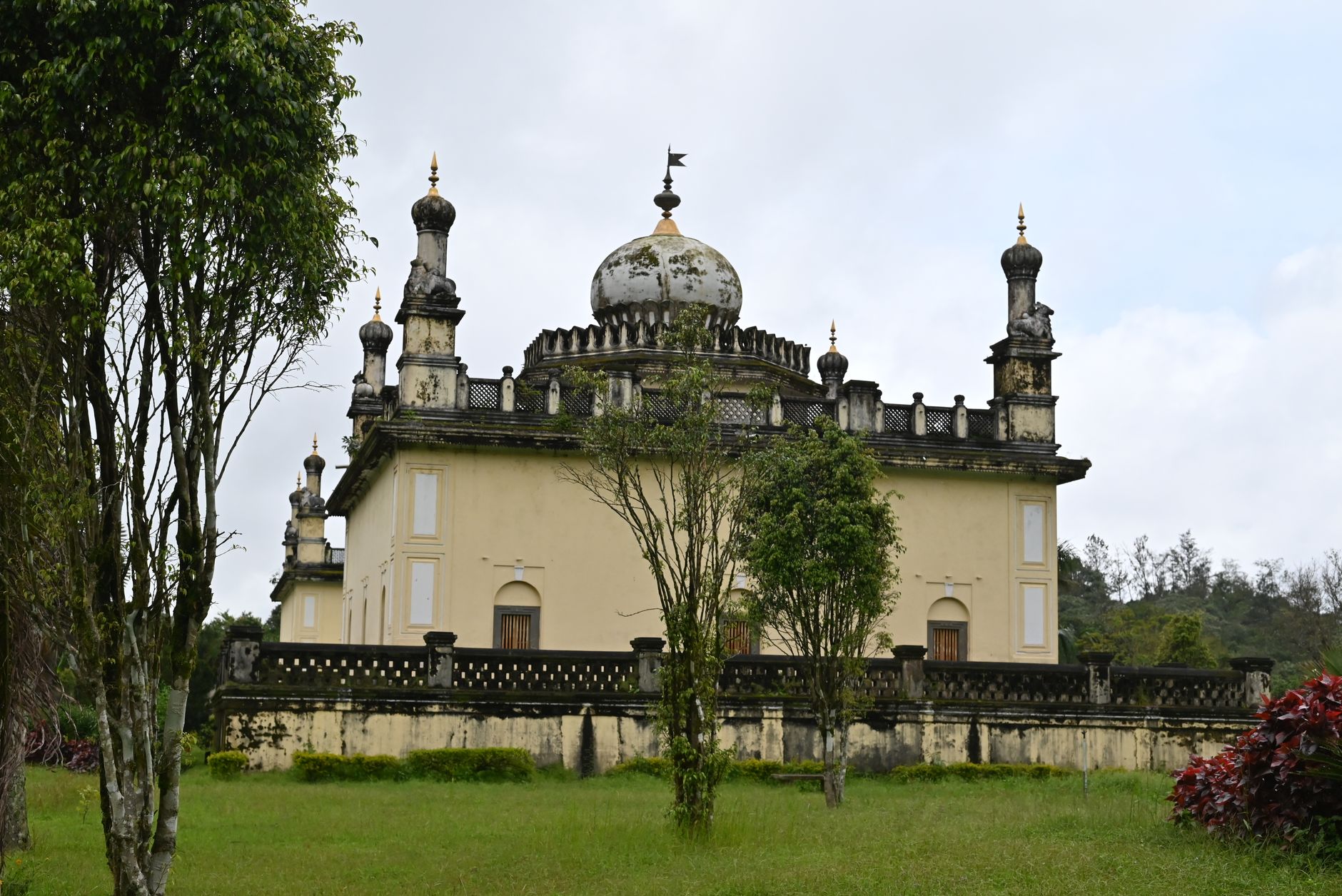
Chowta Palace Chikmagalur: History, Architecture & Visiting Guide
Chowta Palace is a 19th-century royal residence located in Chikmagalur town that represents an important chapter in the region's feudal history. Built during a period when local rulers maintained considerable autonomy under British oversight, the palace combines traditional Malnad architectural elements with colonial design sensibilities, creating a distinctive structure that reflects the complex social dynamics of that era. While the building remains partially preserved, it offers visitors a tangible connection to Chikmagalur's royal heritage and the broader history of Western Karnataka.
What is the historical significance of Chowta Palace?
The palace was constructed by the Chowta royal family, who held administrative and cultural prominence in the Chikmagalur region during the 1800s. The Chowtas were part of the landholding aristocracy that maintained their estates and influence even as British colonial rule expanded across South India. The palace construction reflects the period when local rulers began adopting European architectural influences whilst retaining connections to traditional regional design—a pattern visible across many heritage buildings in Karnataka during this transitional period.
The structure itself serves as a physical record of late 19th-century wealth and power, built using materials and construction techniques available during that time. The palace's existence in Chikmagalur town, rather than in isolated rural estates, indicates the family's engagement with the emerging urban centres and their adaptability to changing political circumstances.
Related: Talakaveri and Bhagamandala: The Cauvery Origin Trip
See also: Mysore Dasara Jamboo Savari: Best Viewing Spots and Timings
See also: Gate 6 Infosys Electronic City: Location, Access & Nearby Guide
How does the architecture blend styles?
Chowta Palace exhibits a fascinating architectural vocabulary that merges European colonial conventions with locally rooted design traditions. The building features pitched roof sections and window proportions influenced by British administrative structures common across India during the Raj era, whilst simultaneously incorporating verandahs and spatial arrangements suited to the Deccan climate and local building practices.
The facade maintains a certain formality expected of a royal residence of that period, with defined entrance porticos and organised room layouts reflecting Victorian sensibilities about domestic hierarchy and space. However, the interior arrangements—particularly courtyards and the relationship between covered and open spaces—reflect genuinely regional priorities rather than wholesale copying of European country house designs.
These hybrid architectural approaches, visible across palace structures in Mysore, Coorg, and Chikmagalur, emerged not from confused aesthetic confusion but from practical adaptation: local rulers employed architects and craftspeople who understood both emerging colonial taste and established regional building knowledge.
What can visitors actually see at Chowta Palace?
Access to Chowta Palace has varied considerably over recent years, shifting between public visitation and restricted access depending on restoration efforts and ownership arrangements. When the palace is open to visitors, the exterior architecture remains the primary focus, allowing observation of the structural style, proportion, and decorative detailing from the grounds and approaching pathways.
Interior viewing, when permitted, typically reveals period-appropriate room layouts, ceiling details, and original woodwork elements that convey something of life within a 19th-century royal household. Visitors should confirm current access status before visiting, as heritage buildings in regional towns often have limited or seasonal opening hours.
The palace's location within Chikmagalur town places it conveniently near other historically significant sites, making it possible to structure a broader exploration of the region's architectural heritage within a single visit.
How does Chowta Palace compare to other heritage structures in Chikmagalur?
Chikmagalur contains several buildings reflecting different periods and purposes: the Mullayanagiri fort ruins speak to pre-colonial defensive architecture, whilst the Kamakshi Temple represents centuries of religious architecture, and colonial-era administrative buildings dotting the town reflect British governance infrastructure. Chowta Palace occupies a distinct position as a private royal residence that openly synthesises local and European design approaches.
Unlike purely functional colonial structures (post offices, courthouses) or purely religious spaces, the palace embodies the domestic aspirations and social position of a landed family navigating colonial rule. This makes it particularly valuable for understanding how local elites actually lived and presented themselves during the late Raj period, rather than observing only military, administrative, or spiritual spaces.
Visitors interested in architectural history benefit from seeing multiple building types across the town rather than treating any single structure in isolation—the layered history becomes clearer through comparison.
When should you visit Chowta Palace?
Chikmagalur's climate makes most months suitable for visiting, though the town experiences its heaviest rainfall from June through August, which may affect access to heritage buildings. The post-monsoon months from September through November offer comfortable temperatures and typically better visibility for photographing exterior architecture.
Winter months (December through February) provide warm days and cool evenings, though these are also peak tourist season, bringing larger crowds to the town's attractions. Spring (March–May) can become quite warm, but remains popular with visitors combining palace visits with Chikmagalur's famous coffee plantations and hill stations.
Before planning a specific visit, confirm current opening arrangements, as heritage buildings sometimes restrict access during particular seasons or for maintenance work.
Practical visiting information for Chowta Palace
Location and accessibility: The palace sits within Chikmagalur town proper, making it accessible via standard town roads. Most visitors reach it by walking from central town areas or using local transport, though parking availability varies depending on the specific access point.
Admission and opening hours: Current admission policies should be verified through local tourism offices or town information services, as arrangements change based on restoration work and property management decisions.
Photography: Confirm permissions for photographs, particularly if interior spaces are accessible, as some heritage buildings restrict internal photography or have specific rules around commercial use.
Guided exploration: Local guides in Chikmagalur can typically provide contextual historical information about the palace, royal family significance, and architectural details that enhance understanding of what you're observing.
Combining with other visits: Structure your town exploration to include related heritage sites—the fort ruins, temples, and colonial buildings create a more complete picture of Chikmagalur's layered history than visiting any single structure.
What is Chowta Palace's current preservation status?
The palace remains privately owned, which affects public access and long-term preservation priorities. Heritage buildings under private ownership sometimes receive excellent conservation but limited public availability, whilst others face deterioration through deferred maintenance. The specific condition and openness of Chowta Palace shifts depending on ownership circumstances and investment in restoration.
Karnataka's heritage conservation efforts increasingly involve partnerships between private owners and cultural organisations, though not all buildings have achieved formal heritage listing or dedicated restoration funding. Visitors should approach visiting heritage structures with appropriate expectations about potential weathering, incomplete restoration, or limited access areas.
FAQ: Chowta Palace Questions
Is Chowta Palace open to the public? Access varies—sometimes open for external viewing and occasionally for interior tours, depending on restoration work and ownership arrangements. Always confirm current status with Chikmagalur's tourism office before planning a specific visit.
How long does a visit typically take? External viewing and photography usually require 30–45 minutes. Interior tours, when available, might extend this to 60–90 minutes, particularly if accompanied by a knowledgeable guide providing historical context.
Can you visit Chowta Palace independently without a guide? Yes, though a guide significantly enriches understanding of architectural details, historical significance, and family context. Local guides available in Chikmagalur town can be arranged through tourism services or your accommodation.
What's the best way to reach Chowta Palace from Bangalore? Chikmagalur is approximately 240 km from Bangalore via the Bangalore–Mangaluru highway, roughly a 4–5 hour drive. Most visitors prefer early morning departures, reaching town by mid-morning. Regular bus services also connect Bangalore and Chikmagalur.