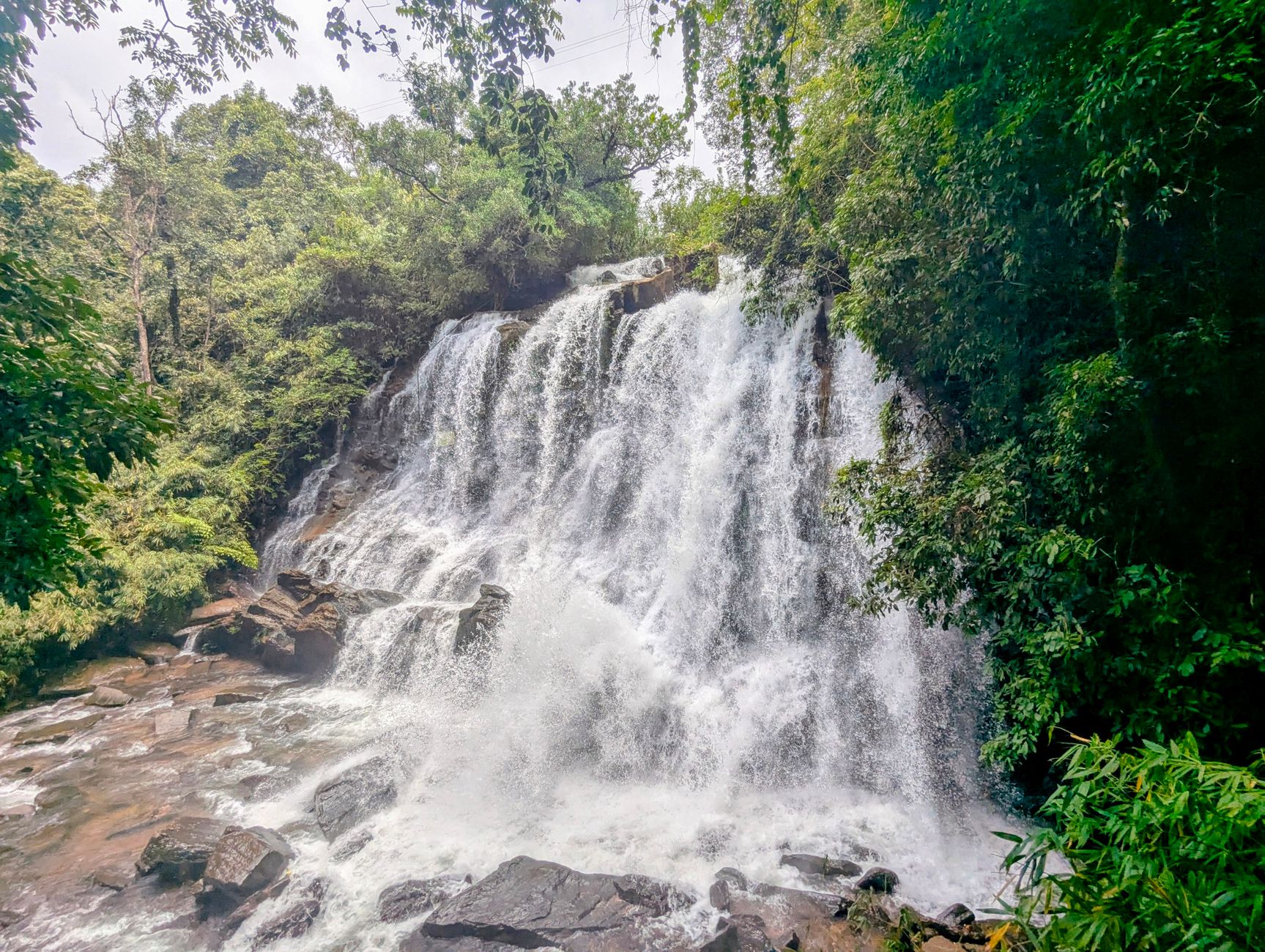
The twin towns of Talakaveri and Bhagamandala sit at the culmination of the Cauvery River's long journey through the Deccan, acting as both its spiritual and geographical birthplace. A visit here is less about conventional tourism and more about understanding the river's sacred place in South Indian culture whilst walking through misty, forested hillsides where cardamom and coffee plants grow beneath dense tree cover. The experience combines temple visits with nature walks across the Western Ghats, creating a pilgrimage journey that feels genuinely meaningful rather than merely picturesque.
What makes Talakaveri and Bhagamandala significant?

The Cauvery River holds immense religious importance across Karnataka, Tamil Nadu and beyond, and these two locations mark where the river begins its 800-kilometre journey to the sea. Talakaveri, situated at approximately 1,270 metres elevation on Brahmagiri Hill, contains the Talakaveri Temple where devotees believe the river emerges from the earth itself. Bhagamandala sits just downstream, where the Cauvery meets another sacred river, the Sujyothi, creating a confluence point considered especially auspicious for ritual bathing and prayer. During the monsoon months (June to August), local residents and pilgrims gather for temple festivals where the river's rising water levels are seen as the deity's blessing.
Historically, these locations formed part of Coorg's broader spiritual landscape, with the region's rulers and local communities building temples and infrastructure to facilitate pilgrimage traffic. The Talakaveri Temple itself, though rebuilt several times, represents centuries of continuous worship, whilst Bhagamandala's location at the river confluence creates natural amphitheatre-like geography where sound carries across water and stone, enhancing the spiritual atmosphere.
Related: Bangalore to Mysore by Train: Vande Bharat vs Shatabdi Express – Which is Better?
See also: Mysore Dasara Jamboo Savari: Best Viewing Spots and Timings
See also: Hotels Near Srirangapatna, Mysore: Where to Stay Close to History
How does the geography work here?

Talakaveri sits higher up the mountain, requiring roughly a 4-kilometre walk through forested terrain from a car park near the temple base. This walk itself becomes part of the journey—the path winds through cardamom plantations and coffee estates, with the air becoming noticeably cooler and more humid as elevation increases. The temple sits beside a natural spring (the Cauvery's actual source point), though during dry seasons the water flow diminishes significantly. Bhagamandala lies in lower terrain, about 12 kilometres away by road, where the river has already gathered more water and momentum. The landscape between the two towns remains largely forested with scattered settlements and agricultural patches, meaning the journey between them feels deliberately removed from commercial tourism zones.
Reaching these places requires commitment—the nearest major town is Madikeri (roughly 40 kilometres away), and roads become narrower and more winding the closer you approach either destination. The elevation change across the route brings noticeable climate shifts, with Talakaveri regularly experiencing mist and cooler temperatures even during summer months when Madikeri swelters below.
Which location should you prioritise?

Talakaveri appeals to visitors seeking the more dramatic, spiritually significant endpoint—the actual origin point complete with temple infrastructure and the natural spring from which the river emerges. The walk up Brahmagiri Hill offers genuine trekking experience, and the temple surroundings feel more developed for pilgrimage purposes. Bhagamandala suits those wanting a more accessible introduction to the river's sacred importance, with easier road access and a working temple beside the river confluence itself. Practically speaking, most visitors do both as part of a single day trip from Madikeri, though the total time commitment (including drives, walks and temple visits) typically runs 6-7 hours.
The atmosphere differs notably between the two—Talakaveri feels more remote and spiritually concentrated, with fewer commercial structures and a stronger sense of pilgrimage purpose. Bhagamandala's confluence location creates different visual appeal, where you see the two rivers meeting and can observe local ritual practices more directly.
What's the practical route and accommodation strategy?
Most visitors base themselves in Madikeri, the district headquarters, and make Talakaveri and Bhagamandala day-trip destinations. The Cliff Edge Coorg offers well-positioned 3-star accommodation with views across the Coorg landscape, whilst Amanvana Spa Resort - Coorg provides 4-star comfort with strong guest ratings if you want pampering alongside pilgrimage. For heritage-focused stays, Indo Asia Heritage Coorg, Formerly Heritage Resort Coorg combines 5-star facilities with cultural awareness.
From Madikeri, drive north-west towards Virajpet, then follow signs for Talakaveri. The drive takes roughly 50-60 minutes depending on road conditions. Arrive early—morning visits suit both the temple schedule (most active between 6am-12pm) and the likelihood of clearer weather before afternoon mist thickens. The 4-kilometre walk to Talakaveri Temple typically takes 45 minutes to an hour at comfortable pace, with water and rest stops available but no commercial facilities once you leave the base area.
After visiting Talakaveri, descend and drive to Bhagamandala (roughly 12 kilometres, 25-30 minutes), where you can explore the confluence temples and riverbank areas. Both locations feature basic temple-operated food stalls offering simple vegetarian meals—plan on eating light lunch here rather than expecting restaurant-quality food. Return to Madikeri for dinner and evening rest.
What should you know before visiting?
Temple protocols matter here—dress modestly (shoulders and knees covered), remove shoes at temple entrances, and ask permission before photographing religious spaces or devotees engaged in prayer. The walk to Talakaveri Temple involves some steep sections and exposed stone steps, making sturdy footwear essential rather than optional. During monsoon months (June-September), paths become slippery and mist reduces visibility, but this also creates atmospheric experience and the river flows powerfully. Winter months (November-February) bring the clearest weather and most comfortable walking conditions.
Both locations remain genuinely devotional spaces where tourism feels secondary to spiritual practice—expect crowds during festival periods (particularly Cauvery Theerthavahini Brahmotsava at Talakaveri) and quieter experience during regular months. The river itself deserves respectful approach; avoid swimming or wading unless you fully understand local customs and safety.
Read about the broader region to contextualise your visit—understanding Coorg's history as a warrior kingdom and its later role in the Indian independence movement adds depth to temple visits and helps you grasp why these water sources held political and cultural importance alongside spiritual significance.
FAQs
How long should I spend at Talakaveri and Bhagamandala? Plan a full day trip from Madikeri: roughly 2-3 hours including transport and walk for Talakaveri, 1.5-2 hours at Bhagamandala, plus 1.5 hours drive time combined. Alternatively, stay overnight in the area if you want a more leisurely pace and wish to experience early morning temple atmosphere.
Is the Talakaveri walk suitable for all fitness levels? The 4-kilometre path involves elevation gain and some steep sections, requiring moderate fitness. It's not technically difficult but does demand stamina and proper footwear. Those with significant mobility concerns may find it challenging, though the temple base and lower sections remain accessible.
What's the best time to visit these towns? October to February offers clear skies, comfortable temperatures and accessible trails. Monsoon (June-September) brings atmospheric mist and full river flow but creates slippery conditions. Summer (March-May) remains warm but walkable, though the spring may dry significantly.
Can I visit as a non-Hindu visitor? Yes, temples welcome visitors of all backgrounds provided you respect protocols: cover shoulders and knees, remove shoes at temple entrances and follow local guidance. Ask permission before photographing religious activities.