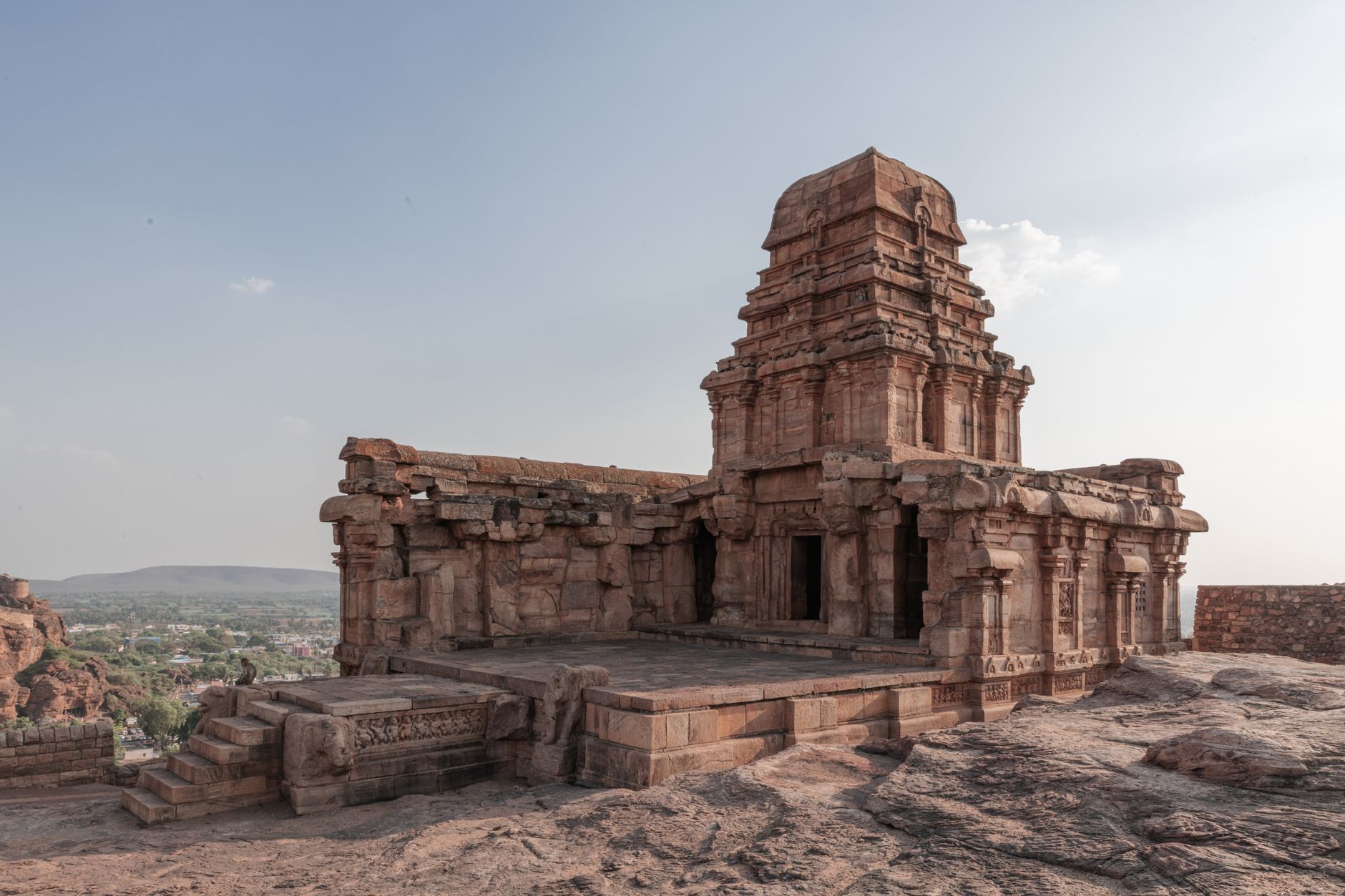
Badami, Aihole and Pattadakal form a tight triangle in northern Karnataka where the early Chalukya dynasty left behind some of the most consequential temple architecture in South Asia. You can cover all three meaningfully in two full days, though three days lets you actually absorb them rather than just tick them off. All three sites sit within roughly 45 kilometres of each other, with Badami as the natural base.
What exactly is the Chalukya circuit, and why does it matter?

Between the 6th and 8th centuries CE, the Badami Chalukyas built their capital at Vatapi — the ancient name for Badami — and experimented with temple forms that would eventually crystallise into both the Nagara style of the north and the Dravida style of the south. Aihole, an older trading town nearby, functioned as something like a laboratory, with over a hundred temple structures in varying stages of architectural evolution. Pattadakal, a ceremonial coronation site on the banks of the Malaprabha river, represents the mature synthesis where the two traditions coexist on a single campus. Taken together, the three sites tell a continuous story of architectural thinking across roughly two centuries.
Aihole and Pattadakal together hold UNESCO World Heritage status (as part of the Group of Monuments at Pattadakal). Badami's cave temples deserve equivalent recognition in terms of artistic quality, even if their formal status differs.
Related: Vijayapura in 2 Days: What to See and Where to Stay
See also: Mysore in 2 Days: The Complete Itinerary & Where to Stay
See also: One Day in Bandipur: What Not to Miss
How should you structure the two or three days?

Day one: Badami caves and fort
Arrive in Badami by train from Hubli (roughly two hours) or by road from Hospet or Gadag, and check in before 10am if you can manage it. The cave temples are carved into a sandstone cliff face above Agastya Lake, and the morning light that catches the red-ochre rock before midday is genuinely worth timing your arrival around.
The four main caves are numbered rather than named. Cave 1 has the most dramatic sculpture — a 18-armed Nataraja panel that feels arrestingly alive even after fifteen centuries. Cave 3, the largest, is dedicated to Vishnu and contains inscriptions that confirm a date of 578 CE, making it one of the few precisely dated early Chalukya structures. Cave 4, Jain in affiliation, tends to be quieter and rewards a slower walk. Budget two to three hours here and resist the urge to rush.
After the caves, the fort on the plateau above the lake takes another hour and offers views across the tank and the ruined structures on the opposite hillside. The Archaeological Survey of India museum near the entrance is small but contains some exceptional sculpture salvaged from around the district — worth thirty minutes of your afternoon.
Spend the evening walking the streets around the tank as the light fades and the local chai stalls fill up.
Day two: Aihole
Aihole is 36 kilometres from Badami and takes about 45 minutes by road. An auto from Badami will negotiate a rate for a half-day or full-day circuit — agree on the itinerary and price before you depart. The main temple complex near the entrance contains the Durga Temple, which is not dedicated to the goddess Durga but takes its name from the Kannada word for fort (durga), since it was enclosed within a fortification. Its apsidal plan — a semi-circular end wall borrowed from Buddhist chaitya halls — is unlike almost anything else in Hindu temple architecture.
The Lad Khan temple is even older and looks deceptively simple: a flat-roofed assembly hall that appears almost domestic until you study its carved pillar brackets. The Ravanaphadi cave, a short walk away from the main group, contains a remarkable Shiva sculpture that shows the same ambition as the Badami caves with a slightly rawer energy.
Aihole has well over a hundred structures scattered across the town and surrounding fields, most of them modest in scale, several incorporated into living homes or functioning as grain stores. This domesticated quality is what makes Aihole feel different from the other two sites — it is an archaeological landscape woven into an ordinary village rather than a preserved monument in isolation.
Day three (or day two afternoon): Pattadakal
Pattadakal sits 22 kilometres from Badami on the Malaprabha and is best visited in the mid to late afternoon when the tour buses have thinned and the light softens. The main compound contains eight major temples and several smaller shrines, and the contrast between the Rekhanagara towers (northern style) and the Dravida towers (southern style) is immediately visible side by side — which is precisely what makes Pattadakal so useful as a concluding stop on this circuit.
The Virupaksha temple, built in 740 CE by Queen Lokamahadevi to commemorate the Chalukya victory over the Pallavas, is the largest and most elaborate. Its interior columns carry some of the finest narrative sculpture panels you will find anywhere in Karnataka. The Papanatha temple at the far end of the compound is older and slightly rougher in execution, which makes the stylistic development visible in a single afternoon's walk.
Where should you stay on the Chalukya circuit?

Badami is the obvious base for all three sites, and the accommodation range has improved in recent years.
For the best overall guest experience on current ratings, Mavi Retreat (rated 9.2/10 from 23 reviews) and Kusum Resort (9.0/10 from 44 reviews) lead the field — both smaller properties with more personal attention than the larger hotels. Krishna Heritage (8.8/10 from 68 reviews) and BADAMI HERITAGE RESORT (8.7/10 from 105 reviews) offer solid mid-range comfort with enough reviews to feel reliable.
If you prefer the security of a branded property, Wada 1 is a four-star option with an 8.6 rating, and Sterling Banashree Badami (8.0/10 from 198 reviews) provides reliable four-star facilities at a modest distance from town. Hotel Badami Court (8.3/10 from 94 reviews) is a well-regarded three-star option with a longer track record.
For budget travellers, KSTDC Hotel Mayura Chalukya, Badami and Hotel Rajsangam International both function adequately as a base, though the Clarks Inn's 6.5 rating from 286 reviews suggests it has struggled to maintain consistency.
What should you eat and when?
Badami's food scene is modest but honest. Jowar roti with groundnut chutney and a thick dal is the staple that turns up at almost every local eatery and genuinely suits the climate. The town has a handful of hotel restaurants that serve a North Karnataka thali at lunch — this is the meal to prioritise. Street food around the tank in the evenings includes the local version of mirchi bajji (green chilli fritters) that is considerably hotter than the Bengaluru equivalent, and well worth the experience if you can handle it.
Carry water and light snacks to Aihole and Pattadakal — facilities at both sites are minimal.
Practical things worth knowing before you go
The Archaeological Survey of India charges a combined ticket for Pattadakal and one for Badami caves — keep them on you as staff check at multiple points. Aihole has a separate entry. A combined private car hire for a two-day Badami–Aihole–Pattadakal circuit from Badami town typically works out cheaper than organising separate autos for each site. The best months for the circuit are October through February; summers are dry and very hot, and the monsoon months (June to September) make the sandstone slippery and some access routes difficult.
For more on timing your visit to the region, the Badami travel guide covers seasonal conditions in detail.
FAQ
Can you do all three sites in a single day? Technically yes, but you would be moving too fast to absorb any of them properly. Aihole alone rewards several unhurried hours. Two days is the practical minimum; three is more comfortable.
Is Pattadakal worth visiting if you have limited time? Yes — if you must choose between Aihole and Pattadakal, Pattadakal gives you the most concentrated and architecturally legible experience in the least time. Aihole rewards those who want to wander and explore beyond the main compound.
How do you get between the three sites without a private car? Local autos and shared jeeps run between Badami, Aihole and Pattadakal, though schedules are irregular. Hiring a single auto or tempo traveller for a fixed day rate from Badami is by far the most practical option and not expensive when split between two or three travellers.
Are guides available at the sites? ASI-approved guides are available at Badami and Pattadakal, and genuinely add value — the iconographic detail in the sculpture panels is difficult to read without context. At Aihole, the smaller visitor numbers mean a guide is rarer; a good guidebook or downloaded resources help considerably.