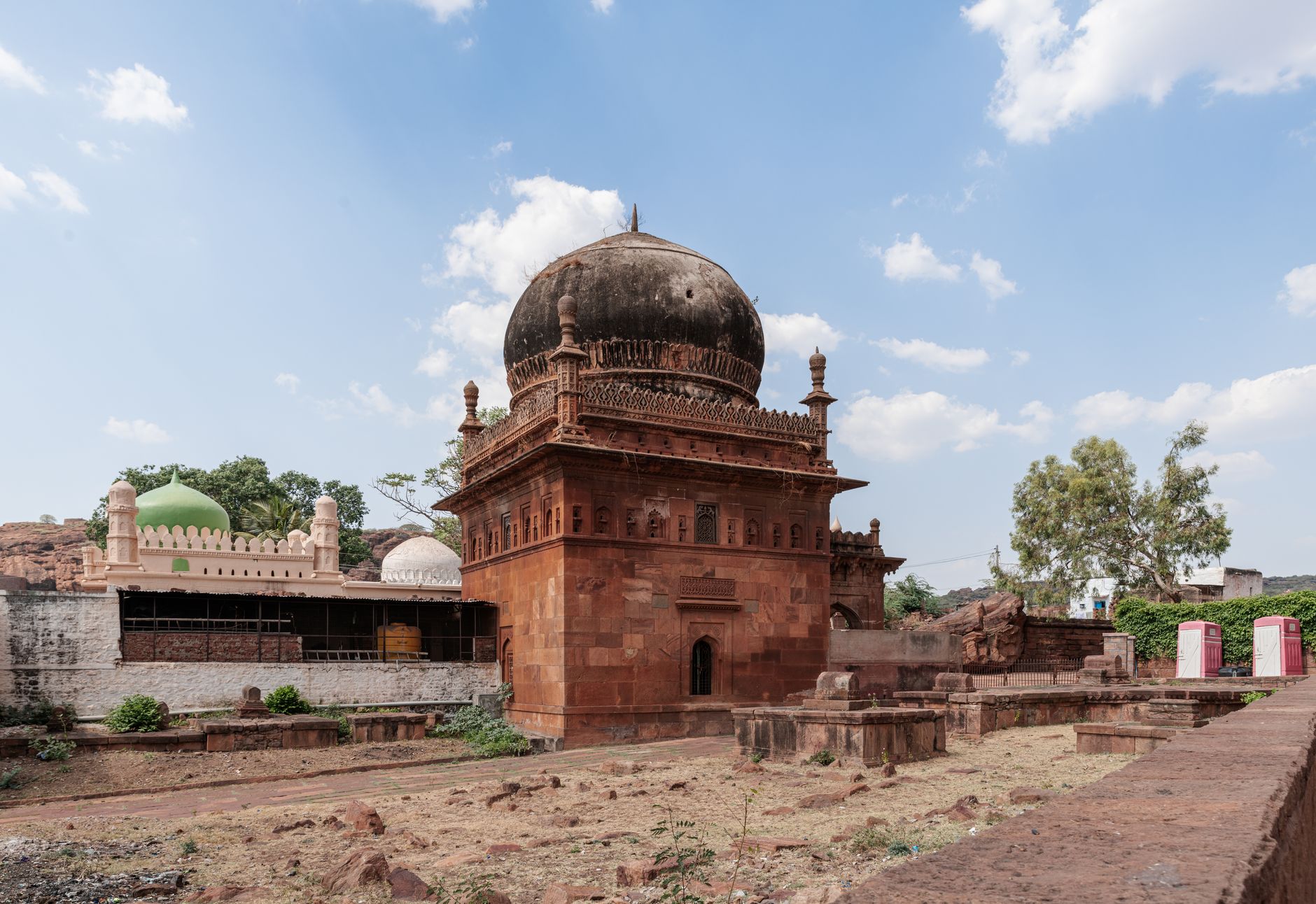
Things to do in Bidar: attractions and local tips
Bidar, in north-eastern Karnataka, is a layered historical city where Deccan sultanate architecture meets Sufi spirituality. Beyond the famous Bidar Fort, you'll find intricate Persian-influenced tombs, ancient temples, and a landscape dotted with Buddhist caves. The city rewards slow exploration—wandering its bazaars, sitting in quiet courtyards, and talking to locals who know centuries of stories.
What are the main attractions in Bidar?

Bidar Fort is the spine of any visit here. Built in the 15th century and later fortified by the Bahmani Sultanate, it sprawls across a hilltop with mud and stone walls that catch the light differently at dawn and sunset. Inside, you'll walk past ruined palaces, mosques with tilework (some still bright blue and turquoise), and underground passages. The scale is vast but intimate—you can spend hours here without crowds. Entry is ₹100 for Indians, around ₹500 for foreigners; allow 2–3 hours minimum.
Tomb of Mahmud Gawan, just outside the fort, is unmissable. This 15th-century minister's resting place is a geometric marvel: a four-storey structure with tilework so intricate it looks almost impossibly ornate. The turquoise and blue glazed tiles catch sunlight, and the archways have that Persian restraint and precision. Local guides (₹300–500) are genuinely helpful here and can explain the calligraphy.
Related: Mysore Dasara 2026: Dates, Schedule and What to Expect
See also: Infosys Gate 6 Bangalore: Access, Timing & What to Know
See also: Fortune Suites in Karnataka: What to Expect and Where to Find Them
Ashtur Mausoleum sits 3 km from the city centre. It's a quieter, more atmospheric spot—a vast, echoing dome containing tombs of royal women from the Bahmani era. The silence inside is profound; you hear your footsteps and birdsong from courtyards above. Go in the late afternoon when golden light floods through the dome openings.
Bhakarmal Temple (also called Rangin Mahal), inside the fort complex, shows how Hindu and Islamic architectural traditions sometimes coexist in Deccan cities. The carved stone pillars are striking, and views from the temple overlook sprawling grasslands to the north.
Where are Bidar's Buddhist caves?

Bidar has 14 ancient Buddhist caves carved into rock faces around the city, dating from the 6th–7th centuries. They're far less visited than those at Ajanta or Ellora but equally rewarding. The caves near Narasimha Jhira (about 8 km north) include both cave temples and monastic cells. Some have surviving traces of frescos; you'll see carved pillars and meditation chambers. Hire a local taxi or guide (₹1200–1500 for a half-day) to visit several caves in one stretch—driving between them saves time and your legs.
The Papanasini Temple area also has nearby cave sites and offers views across the Deccan plateau. Early morning visits mean softer light and cooler air.
What's worth exploring in Bidar's old city?
The bazaars around Gagan Mahal are where Bidar feels most alive. Narrow lanes lined with spice shops, metalware vendors, and textile sellers still follow medieval street patterns. The smell of turmeric, cardamom, and dried chillies is intense and genuine. Ask locals for tea at small dhabas tucked into corners—conversations often reveal family histories tied to the sultanate era.
Rangin Mahal (the colourful palace) ruins are scattered and less dramatic than the fort, but wandering them gives you a sense of how the city was layered across centuries. Photography here feels less obvious than at the fort; it's quieter.
Solah Khambi Mosque (Mosque of Sixteen Pillars) is simple but elegant—a working mosque with carved stone pillars and a courtyard. Respect prayer times if you visit; non-Muslims are generally welcome outside these hours.
When should you visit Bidar?
October to February is ideal. Mornings are cool (10–15°C in December), and the sky is often clear. The fort's stonework and tiled surfaces show true colour. You'll be comfortable walking for 3–4 hours without exhaustion.
March to May brings heat (32–38°C by May). Afternoon visits become difficult; plan early morning starts and rest during midday. Avoid heavy exertion.
June to September is the monsoon. Rains can be heavy, and many sites become slippery. The landscape turns lush green, and crowds thin dramatically, but expect wet weather and plan indoor activities (museums, bazaars) as backup.
Where should you stay?
Mastiff Select Bidar (4-star, 9.1/10) is the most reliable upper-mid-range option, with good service and a central location—ideal if you want straightforward comfort. For character with slightly more budget flexibility, INSPIRA BY SRS RESORT AND CONVENTION (4-star, 8.4/10) offers resort-style facilities on the city outskirts.
If you prefer heritage atmosphere and quiet, Vintage Retreat Resort (8.7/10) provides a village-like setting where you can decompress after walking the fort all day. Budget-conscious travellers might try Hotel The Crown Town (3-star, 9.7/10), which punches above its rating for value.
How should you move around Bidar?
Shared auto-rickshaws run set routes around the main attractions (₹10–20 per ride). They're unreliable for specific timing but work for point-to-point travel. Private taxi hire (₹1200–1800 for a full day) is sensible if you want to visit caves and scattered monuments without waiting. Walking inside the old city and fort is essential—you'll discover alleyways and courtyards that taxis can't reach.
Local tips
– Bring water and a hat. The Deccan plateau gets intense sun, and shade inside monuments can be scarce. – Hire a guide at the fort entrance (₹300–500 for 1.5–2 hours). Many are retired historians and their stories transform the ruins from stones into lived space. – Visit Gagan Mahal bazaar early morning when it's cooler and shop owners are most open to chat. – Photography note: The Tomb of Mahmud Gawan is stunning at sunset when turquoise tiles glow. Arrive by 5 pm in winter months. – Combine Bidar with Gulbarga (80 km south, 2 hours by road)—both are Deccan sultanate cities and complement each other historically. See our guide to Gulbarga attractions.
How many days should you spend in Bidar?
2–3 days is ideal. Day 1: Bidar Fort and Gagan Mahal bazaar. Day 2: Tomb of Mahmud Gawan, Ashtur Mausoleum, and Buddhist caves (half-day excursion). Day 3: Temples, old city wandering, and museums. If you're short on time, 1 full day covers the fort, tomb, and bazaar, though you'll miss the quieter, more rewarding edges.
FAQ
Is Bidar safe for solo travellers? Yes. The city is peaceful, and locals are accustomed to visitors. Women travellers report feeling secure in bazaars and at monuments during daylight. Use normal precautions; avoid isolated areas at night.
Do I need a guide? Not essential, but worthwhile. Fort guides unlock historical detail and local stories that transform your visit. Official guides are available at the fort entrance; rates are standardised.
What's the nearest airport? Hyderabad International (120 km, 2.5 hours by road) is the closest major hub. You can also arrive via Bengaluru (570 km, 11 hours) and travel through Karnataka. See our guide to visiting nearby Gulbarga for route options.
Can I visit Bidar as a day trip from Bengaluru or Hyderabad? Technically yes, but not recommended. You'll spend 4–5 hours driving each way, leaving only 3–4 hours to explore. Stay overnight to experience the city properly.