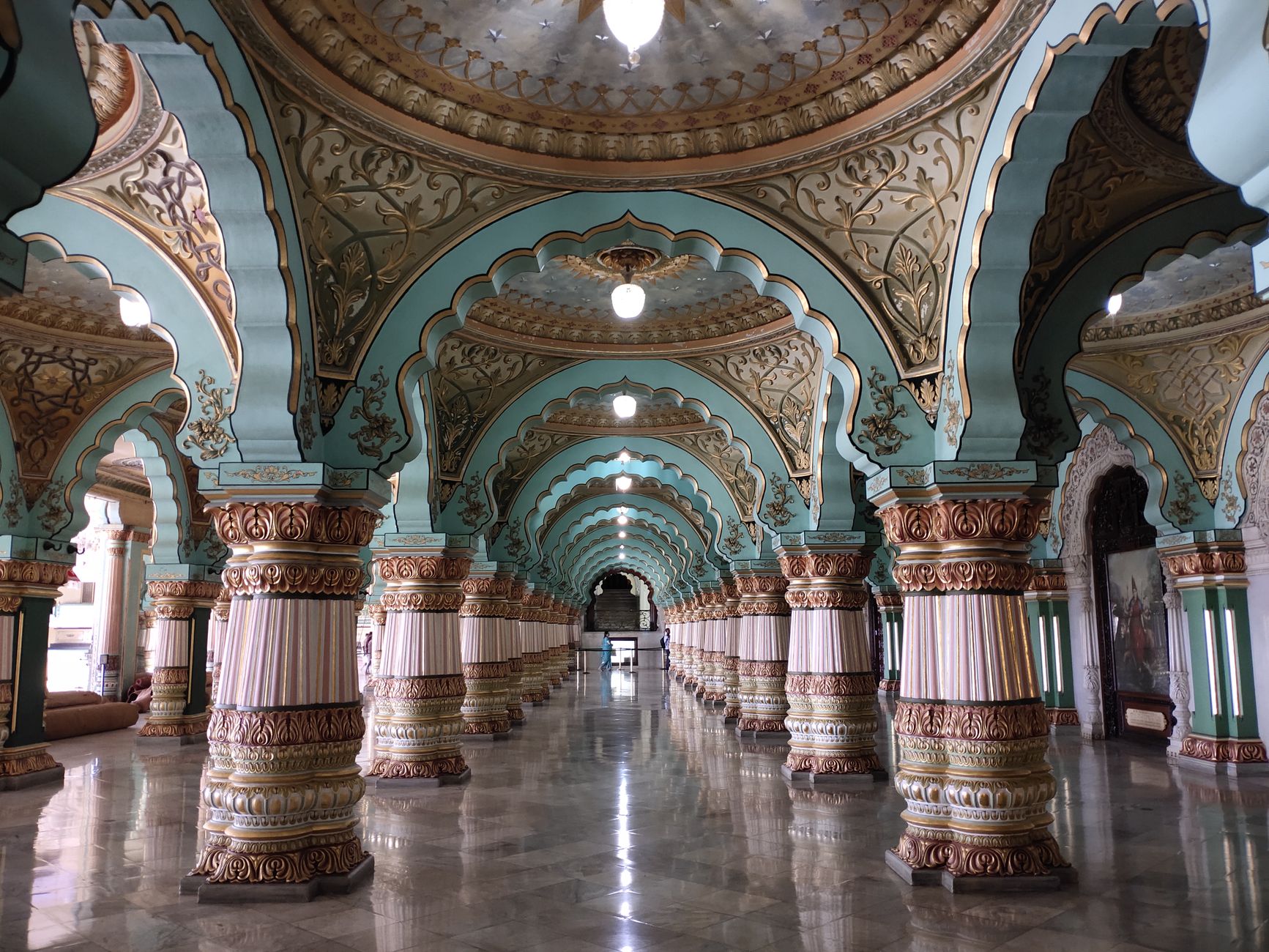
Dasara in Mysore runs for ten days, typically in October, and the city's food culture shifts noticeably during the festival — street vendors multiply, traditional sweets appear in shop windows, and restaurants fill early with families who have travelled from across Karnataka. The most rewarding eating happens well away from the palace gates, in the tiffin houses and market lanes that locals have relied on for decades.
For a broader picture of timing and what to expect, the Mysore travel guide and the best time to visit Mysore page both give useful context around the Dasara season.
What makes Dasara eating different from the rest of the year?
The festival brings a particular energy to food in Mysore that is hard to describe without having experienced it. Hotels run special buffets, sweet shops stock up on the city's famous Mysore Pak weeks in advance, and the area around Devaraja Market becomes almost impossibly busy with vendors selling roasted groundnuts, sugarcane juice and seasonal fruit. Families gather across the city, which means tiffin houses and darshinis — the no-frills, stand-at-the-counter breakfast and lunch spots that define everyday Mysore eating — are busier than usual and often at their best, because high turnover means fresher batter, fresher oil and cooks who have settled into a rhythm.
Related: Weekend Treks Near Bangalore: Savandurga, Skandagiri and Beyond
See also: Hotels in Hampi: What to Know Before You Book
See also: Coorg County Resorts: What to Expect & Where to Stay
The one practical point to keep in mind: from about 5 PM onwards on procession days, roads near the palace and Mysore Zoo are closed or severely restricted, and restaurants on those routes fill up hours before the Jamboo Savari elephant procession begins. Eating an early dinner or carrying snacks for the procession itself is genuinely useful planning.
Where do Mysore locals eat breakfast during Dasara?
Mysore's tiffin culture is one of South India's quieter pleasures. The city's idli and dosa are notably soft — locals attribute this to the water and the particular proportion of urad dal that Mysore cooks favour — and the accompanying coconut chutney often has a faintly sweet, almost coconut-cream quality that differs from Bangalore's sharper versions.
The area around Sayyaji Rao Road and the lanes behind Devaraja Market is where you will find the highest concentration of small, family-run darshinis that have been operating for two or three generations. Look for places where the counter is worn smooth and the menu board is hand-painted rather than printed; these tend to be the establishments that have not changed their recipe or their prices dramatically in years. Ragi mudde — finger millet balls served with a thin sambar — is worth trying if you see it; it is less common at tourist-facing establishments but appears regularly in neighbourhood spots.
Where is Mysore Pak actually worth buying?
Mysore Pak is the city's most famous sweet and its quality varies considerably. The version made at traditional sweet shops uses a specific ratio of chickpea flour, sugar and an almost alarming quantity of ghee, and the texture should be crumbly and melt quickly on the tongue rather than chewy or dense. Vegetable ghee versions are cheaper and more common but noticeably different in flavour.
The original Guru Sweet Mart near the palace is often cited as the originator of the recipe, and while the shop has expanded and commercialised since its founding, the product remains consistent. During Dasara, queues form early in the morning and sell-out by mid-afternoon. The sweet shops along KR Circle and in the lanes off Dhanvantari Road are worth exploring as alternatives — some smaller operators produce equally good versions with less waiting.
Beyond Mysore Pak, look for chiroti (a flaky, fried pastry dusted with icing sugar) and the particular version of Karnataka-style holige (a flatbread stuffed with jaggery and lentil paste) that appears in sweet shops around festival time.
What does the street food scene look like during Dasara?
The procession route and the grounds around the illuminated Mysore Palace attract a dense concentration of vendors selling corn roasted directly over coals, masala puri (a Mysore-specific chaat of crushed puris in a spiced pea broth), and mirchi bajji — green chillies dipped in gram flour batter and deep fried, served with a smear of chutney. These are genuinely good and best eaten standing, wrapped in old newspaper if the vendor is traditional about it.
Vadapav is present but feels slightly out of place in Mysore; the city's own snack culture is richer and more interesting. Mosaru vade — a fried lentil doughnut served with yoghurt — is more typically Mysore and easier to find during festival period when vendors cater to local tastes.
Where should you sit down for a full meal?
For a traditional Karnataka meals-on-a-banana-leaf experience, look for restaurants serving what locals call a set meals — rice with sambar, rasam, multiple vegetable preparations, pappadum and a small sweet — typically available at lunch. These places rarely advertise heavily and are often identified more by the steam visible from the kitchen and the sound of stainless steel plates than by any signage.
The hotel restaurant scene during Dasara is a different proposition. If you are staying in the city and want a comfortable, air-conditioned meal without having to negotiate crowds, several of the better-rated hotels run Dasara-specific menus that highlight Karnataka cuisine. The Radisson Blu Plaza Hotel Mysore, rated 9.1/10 across over 2,500 reviews, is a reliable choice for this kind of meal. The Fortune JP Palace, Mysore, part of the ITC Hotels group and rated 8.6/10, similarly runs a kitchen that takes Karnataka cooking seriously. For something with more historical atmosphere, the Lalitha Mahal Palace Hotel, a converted Indo-Saracenic palace near Chamundi Hill, offers a setting that is genuinely unlike anywhere else in the city — the food is secondary to the architecture, but the experience of eating in that space during Dasara week is its own thing.
For mid-range dining without the palace prices, the Hotel Southern Star Mysore, rated 8.7/10, has a restaurant that draws a local clientele as much as hotel guests, which is generally a good sign. The Parklane Hotel, rated 8.3/10, is another solid base for travellers who want walkable access to the main eating streets without paying five-star rates.
Is vegetarian food the norm during Dasara?
Mysore is predominantly vegetarian in its restaurant culture, and during Dasara this tendency is even more pronounced — many families observe partial or full fasting and vegetarian eating during the festival period. Finding a purely vegetarian meal is effortless; finding a non-vegetarian meal outside of specific restaurant clusters (particularly around the bus stand and in certain neighbourhoods away from the palace area) requires slightly more intention. If you eat meat, it is worth identifying suitable restaurants before the day of the main procession, when movement around the city becomes genuinely difficult.
Practical notes for eating well during Dasara
Arrive early for breakfast; most darshinis open by 7 AM and the best batter — which affects idli and dosa quality directly — is used in the first two hours of service. Carry cash in small denominations; street vendors and traditional tiffin houses rarely have card facilities. Drink water carefully; tender coconut from vendors with a visible, intact coconut is safe and genuinely refreshing during warm October afternoons. And if you are visiting for the first time, the Mysore travel guide has practical orientation advice that pairs well with this food guide.
FAQ
What is the single most important sweet to try in Mysore during Dasara? Mysore Pak is the answer almost every local will give — the original version, made with pure ghee and chickpea flour, has a crumbly, rich texture that the commercially produced versions do not replicate. Buy it fresh from a traditional sweet shop early in the day.
Are restaurants near the palace worth eating at during Dasara? Generally no — proximity to the palace means higher prices and kitchens aimed at tourists. Walk ten to fifteen minutes into the surrounding streets and the quality and value both improve significantly.
How early should I eat dinner on procession days? By 4 PM at the latest. Roads close, restaurants fill, and the procession does not wait. Many locals eat a proper lunch and then graze on street snacks during the evening procession itself.
Is it safe to eat street food in Mysore during Dasara? Largely yes, with common sense applied — choose vendors with high turnover (long queues are a good sign), avoid anything sitting in oil for extended periods, and opt for freshly cooked items like bajji or corn over pre-prepared chaat if you have a sensitive stomach.