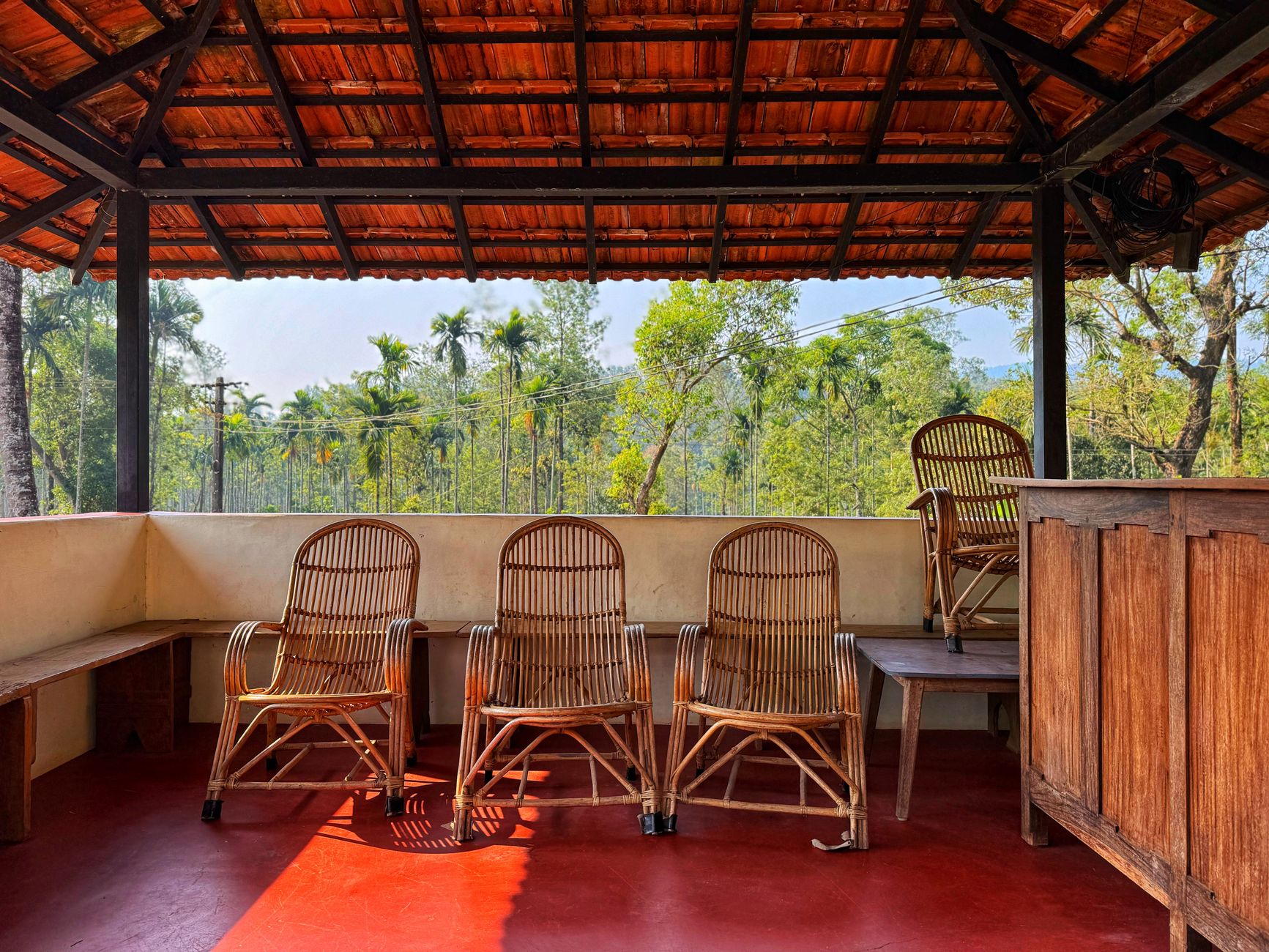
Coorg homestays place you directly into the rhythm of local family life, whether that's morning coffee harvests on a working plantation, kitchen lessons with the family matriarch, or conversations about monsoon farming over fresh-baked buns. Unlike hotels with standardised service, each homestay reflects the personality of its owners, the architecture of the plantation or village it occupies, and the specific meals that have been made in that kitchen for decades.
This isn't aspirational marketing—it's simply what happens when you stay in someone's extended home rather than a commercial property designed to feel neutral and predictable.
What exactly is a Coorg homestay?
The term covers several overlapping categories. Traditional homestays are family-run properties where owners live on-site, often in ancestral homes expanded to accommodate guests. Coffee plantation homestays place you on working estates where you might walk through ripening berries or help with the lighter end of harvesting during season. Village homestays tend to be simpler, often in smaller settlements where tourism is newer and the experience feels less curated.
Related: Kukkarahalli Lake Distance: How Far From Mysore City Centre
Related: Best Time to Visit Mangalore: Season Guide & Weather Tips
Related: Fortune Suites in Karnataka: What to Expect and Where to Find Them
The common thread is direct engagement with the family—you'll eat meals they've prepared (not from a standardised menu), get advice on where to walk and what stories matter locally, and occasionally find yourself roped into kitchen duties or farm activities if you're interested.
Why stay in a Coorg homestay instead of a hotel?
Hotels offer reliability and privacy. Homestays offer knowledge, unexpected meals, and the kind of morning where you realise the coffee you're drinking grew on the same slope you walked yesterday.
You'll typically pay less per night than mid-range hotels, though comfort standards vary considerably—Victorian plumbing and monsoon-era wiring exist alongside modern bathrooms. The real exchange is immediacy for predictability. You gain direct conversations with people who know which forest walks are actually worth the time, why certain spice combinations matter in Kodava cooking, and what the real seasons feel like here rather than what the website says they are.
Families often prepare dishes they actually eat—not tourist-friendly approximations. If the family makes a particular pickle or breakfast specialty, you'll likely eat it. If it's not their tradition, no amount of requesting will change it.
How to choose a Coorg homestay
Read reviews specifically for recent accounts of what people experienced with the actual family and food, not just photos of the property. Look for mentions of the owner's name and personality—good reviews often reference conversations, not amenities.
Decide what matters to you first. Coffee plantation location versus village access? Shared family meals versus independence? Working farm experience versus relaxation? These shape your choice more than star ratings. Monsoon homestays need good drainage (ask directly or check reviews from June–September visitors). If you're arriving with specific dietary needs, contact the family directly rather than relying on listed information—most are flexible but need genuine notice.
Avoid places describing themselves with language that feels hotel-like ("premium leisure experience," "luxury homestay"). The best ones describe what they actually do: "My family runs a coffee farm; guests help during harvest if interested" or "We cook three meals daily and eat together."
Practical reality: what to actually expect
Water pressure may be inconsistent, especially in upper estates during summer. Electricity can flicker during monsoon. WiFi exists but may not reach everywhere. If these feel unmanageable, a hotel suits you better. Most homestays aren't attempting luxury—they're offering authenticity, which is different.
Meals are typically scheduled (breakfast 7–8am, lunch 1–2pm, dinner 7–8pm). You don't control timing like you would ordering room service. If your travel style demands flexibility, negotiate this upfront or look elsewhere. Many families are happy to adjust for guests but need agreement at the start.
You're entering someone's home. Small courtesies matter: removing shoes in living areas if the family does, eating what's offered even if unexpected, not treating the family as staff. Most conflicts arise from guests expecting hotel service delivery rather than family hospitality.
Food: the core reason to stay in a homestay
Breakfast typically includes fresh bread, locally made butter, eggs from their birds, and proper coffee—or tea if that's what the family drinks. Lunch might be a single dish emphasising what's seasonal: jackfruit curry during season, fish from nearby rivers, rice and sambar that's been perfected over generations.
Dinner is often lighter—typically rice, a vegetable curry, pickle, and sambar or rasam. Kodava cuisine—the traditional cooking of Coorg's main community—emphasises pork, fish, and intense spice combinations that appear if the family eats meat, rarely if they're vegetarian. You don't choose the menu; you eat what the family cooks.
This works brilliantly if you're genuinely open to food. It becomes frustrating if you need options or have preferences beyond basic allergies. Be honest about your eating style before booking.
Comparing homestay regions within Coorg
Plantation homestays, concentrated around Madikeri and Virajpet, involve actual coffee work and that landscape of terraced slopes. Village homestays near smaller settlements like Kushalnagar offer different access—less touristic, more daily-life engagement, simpler facilities usually.
Houseboats converted to guesthouses exist around Bhagamandala but are rare and often bridge the homestay-hotel line. Higher-altitude stays near Kodaikanal borders emphasise trekking and cooler climate. The best choice depends whether you want working farm immersion or cultural village experience—they're quite different.
Booking and timing
Direct contact through homestay websites or WhatsApp often yields better communication than third-party booking sites. Families can answer specific questions about what they actually cook, what the family situation is, and what's realistic for your visit.
Months are April–May (hot, quiet), June–September (lush, cooler, rain), October–November (golden, busy), December–February (mild, crowded). Monsoon is genuinely beautiful but requires comfort with moisture, leeches in forests, and occasional slippery paths. Families appreciate guests who understand this isn't a problem—it's the season.
When a homestay might not suit you
If you want complete autonomy with meals, controlled timing, private space without interaction, or luxury finishes, a hotel is genuinely the right choice. No amount of positive intention changes that homestays are fundamentally social arrangements in someone else's home.
If you want this experience—waking to coffee aromas, meals shared with the family, recommendations from people who've lived here their whole lives—then a homestay gives you something no hotel can replicate.
FAQ
How far in advance should I book a Coorg homestay? Months ahead for October–February (peak season). June–August, you can often book weeks ahead or even as you travel. Most families appreciate two weeks' notice for dietary or access needs.
Are single travellers welcome? Generally yes. Some families prefer couples or small groups for simplicity, so ask directly. Solo travellers often report the most meaningful family interactions.
What if I don't like the family or the experience? This is the risk of homestays. Check recent reviews carefully, communicate expectations before booking, and consider a shorter initial stay (2 nights) to assess fit. Most families are genuinely flexible if issues arise early.
Do I need to participate in farm work? No. It's offered; you choose. Many guests enjoy it briefly; others prefer walking and exploring. Be clear about your preference when booking.