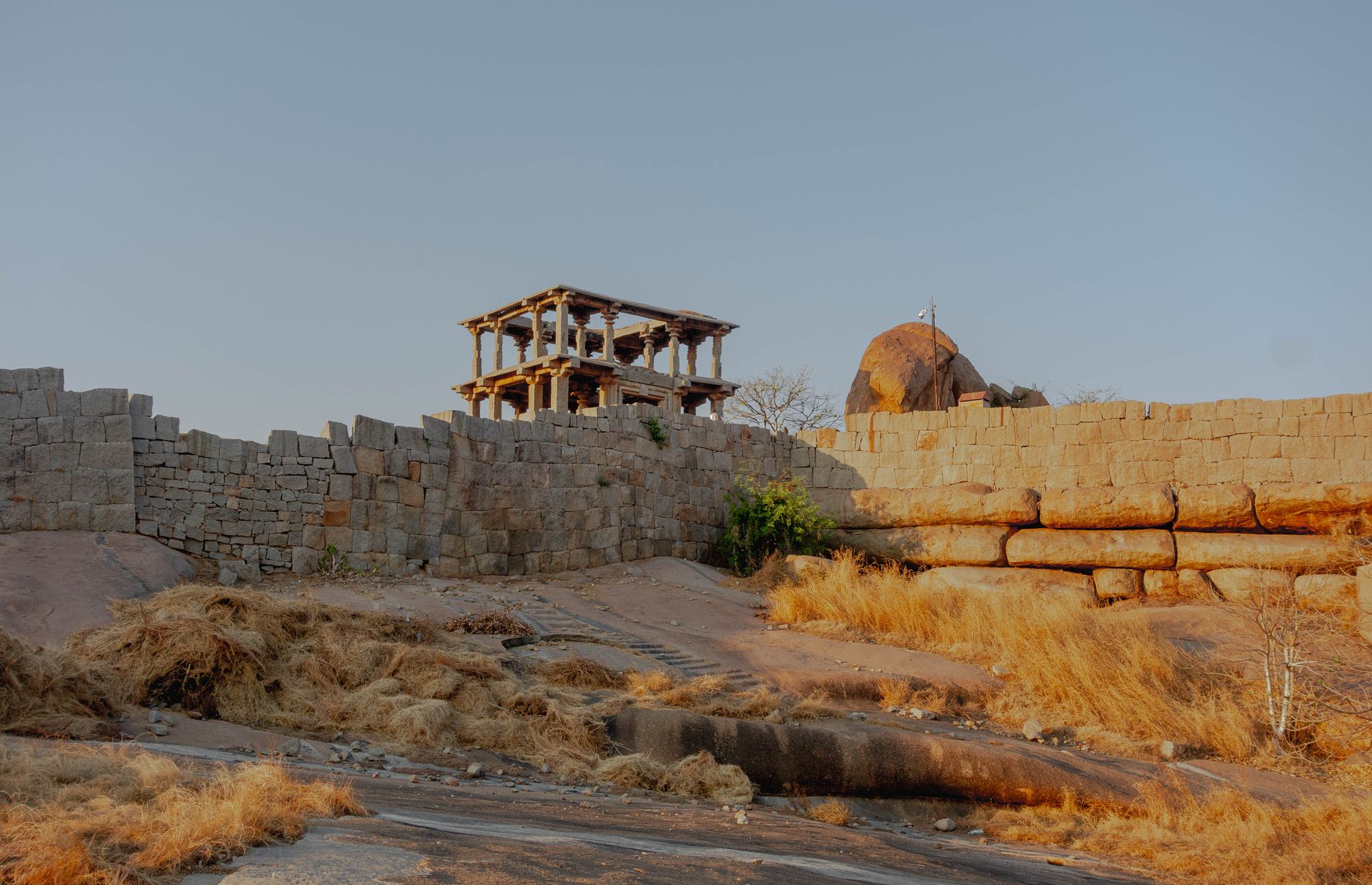
Chikkajala Fort: History, Architecture & Visiting Guide
Chikkajala Fort, situated roughly 40 kilometres north of Bangalore, stands as a compelling example of pre-Mughal and early modern fortification in Karnataka. Built during the 16th century under the Bahmani Sultanate, this modest yet historically significant fort once served as a military outpost controlling trade routes through the Deccan plateau. The structure reveals layers of architectural influence and strategic thinking that shaped the region's medieval defence systems.
What was the original purpose of Chikkajala Fort?
Chikkajala Fort was constructed primarily as a frontier military installation during the reign of the Bahmani Sultanate, when control of the plateau routes between the Deccan and southern Karnataka mattered enormously for trade and territorial dominance. The fort's location—perched on relatively elevated ground with visibility across surrounding plains—was deliberately chosen to monitor merchant caravans, military movements, and potential invaders approaching from multiple directions. Rather than serving as a major administrative capital, it functioned as a garrison stronghold where soldiers, supplies, and weapons were housed to maintain regional security and assert sultanate authority over lesser chiefdoms and feudal lords in the area.
During subsequent centuries, as political boundaries shifted and the Mughal Empire expanded its influence southward, Chikkajala Fort changed hands several times between competing dynasties. Local rulers, including representatives of the Mysore Kingdom and smaller principalities, occupied and maintained the structure at different points, adapting its defensive capabilities to suit contemporary military needs. This succession of rulers left their own architectural marks on the fort, creating a palimpsest of construction styles and modifications that historians find particularly valuable.
Related: Dubare Elephant Camp Timings & Visit Guide
See also: Iruppu Falls and South Coorg: The Quieter Circuit
Related: Coorg Food Guide: Pandi Curry, Akki Roti and Where to Eat
How is the fort's architecture distinctive?
The fort's design reflects practical medieval defensive thinking rather than decorative grandeur. Thick stone walls, typically constructed from locally quarried granite and basalt, form the primary boundary, with remnants still visible today despite centuries of weathering and partial demolition. The masonry technique—roughly fitted stones with lime mortar—demonstrates the straightforward engineering knowledge available during the period, prioritising durability over precision. Multiple bastions once projected outward from the main walls, allowing defenders to rake attackers with crossfire from flanking positions, a strategic principle borrowed from Islamic military architecture of the era.
The fort's interior layout suggests careful planning for self-sufficiency during sieges. Archaeological investigations and surviving structures indicate water storage systems, granaries, and barracks that would have sustained a garrison of several hundred soldiers for extended periods. Gateways, though partially ruined now, show evidence of defensive gates and checkpoints designed to control entry and movement within the compound. The main gate likely featured portcullises and heavy wooden doors, remnants of which suggest sophisticated security mechanisms for a rural fortification.
One notable aspect is the lack of elaborate palatial structures or intricate carvings commonly found in royal forts. This restraint points to Chikkajala's military rather than administrative character—it was built for defence and garrison purposes rather than royal residence or ceremonial functions. This functional approach actually aids modern visitors in understanding the fort's true historical role without the romantic embellishment often layered onto grander monuments.
When is the best time to visit Chikkajala Fort?
The optimal visiting season runs from October through February, when Bangalore's plateau climate becomes pleasantly cool and rainfall becomes infrequent. During these months, temperatures range from 15 to 25 degrees Celsius in the early morning and late afternoon, making exploration of the exposed fort structures comfortable without the intense heat of summer or muddy terrain of monsoon months. Early morning visits, particularly between 6 and 9 a.m., offer both pleasant light conditions for photography and fewer visitors, allowing contemplative engagement with the historical landscape.
Summer months (March to May) render extended walking difficult due to heat and glare reflecting off stone surfaces, whilst the monsoon season (June to September) creates slippery paths and makes detailed structural examination unsafe. Late monsoon and early autumn (August to September) can still offer acceptable conditions for hardy visitors willing to navigate damp surroundings, but you should wear appropriate footwear with good traction.
What should visitors expect to see and experience?
Walking the perimeter of Chikkajala Fort reveals a structure considerably smaller and less dramatically positioned than some of Karnataka's more famous forts, which actually enhances the experience for those seeking authentic historical engagement rather than spectacular vistas. The main wall sections, particularly on the eastern and northern sides, remain substantially intact, stretching perhaps 200 to 300 metres in continuous segments. You can observe the construction techniques closely, examining how builders fitted stones of varying sizes and recognised the need for reinforcement in vulnerable sections.
The interior grounds, now largely open fields, tell their own story through scattered architectural fragments—portions of gate structures, foundation outlines visible in grass patterns, and occasional stone platforms that likely supported military buildings. Walking these spaces encourages historical imagination without relying on reconstructed elements; you're essentially reading the landscape itself. The surrounding terrain, relatively gentle and wooded in patches, provides insight into why this location was strategically valuable—the fort overlooks natural passages and water sources vital to both civilian and military movement.
Photography enthusiasts will find the fort rewarding during golden hour light, when lateral sunlight emphasises the texture and weathering of stone surfaces, making visible the passage of centuries in the masonry itself. The site rarely attracts significant tourist crowds, which means peaceful exploration is typically possible even during popular visiting seasons—a refreshing contrast to more commercialised heritage sites.
How does Chikkajala relate to other Karnataka forts?
Chikkajala Fort represents a particular category within Karnataka's military heritage: the smaller, functionally defensive garrison fort rather than the grand territorial strongholds like Kurnool or Bangalore Fort (though Bangalore's original fort was similarly modest). Compared with the elaborate palace forts of Mysore or the dramatically positioned hillside forts of Daulatabad, Chikkajala prioritised practical military efficiency over aesthetic or dynastic expression. This makes it invaluable to historians interested in understanding routine medieval defence systems rather than extraordinary examples showcasing royal power.
The fort's history also illuminates the broader political instability of the Deccan plateau during the 15th to 18th centuries, when competing sultanates and emerging regional kingdoms constantly jockeyed for territorial advantage. Chikkajala's changing occupiers—Bahmani, Adil Shahi, Maratha, and Mysore rulers at various points—reflect these power struggles in ways that larger, more documented forts sometimes obscure through sheer scale and celebrity.
Are there practical facilities at the site?
Chikkajala Fort remains largely undeveloped for tourism infrastructure. Water, toilet facilities, and shade structures are absent or minimal, so visitors should arrive prepared with drinking water, sun protection, and sturdy walking shoes. The site itself is freely accessible, though you'll want to check locally regarding any access restrictions or guided tour availability, which changes seasonally. Mobile network coverage can be inconsistent in the area, so downloading offline maps beforehand is sensible.
The nearest towns—Kasaba, Kolar, and connections to Bengaluru—offer basic refreshment options and petrol stations. Many visitors combine a Chikkajala visit with exploration of nearby historical sites or the broader Kolar district heritage, transforming a half-day excursion into a fuller regional history experience. The drive from Bangalore takes approximately 1 to 1.5 hours via Kolar Road, making it feasible as a half-day trip or part of a longer heritage circuit.
FAQ
Is Chikkajala Fort difficult to reach from Bangalore? No. The fort lies roughly 40 kilometres north on well-maintained roads towards Kolar. Most vehicles manage the journey in 60 to 90 minutes depending on traffic and exact starting point. Local directions become helpful for the final approach, as signage can be sparse.
Can you climb the fort walls or enter restricted areas? Most of the fort remains safely explorable, though severely damaged sections pose risk. Use common sense regarding structural integrity; loose stones and gaps are hazards. There are typically no barriers, but visitors should avoid climbing deteriorated sections that might collapse.
Is a guide necessary to understand the site? Guides are rarely stationed permanently at the fort itself. Arriving with historical context beforehand—reading about Bahmani military architecture or regional medieval politics—enhances the experience considerably. Local guides in nearby towns may be arranged with advance notice.
What's the best time to photograph the fort? Early morning light (6:30 to 8:30 a.m.) or late afternoon (3 to 5 p.m.) during October to February provides optimal conditions. Avoid midday glare reflecting harshly off stone surfaces.